AI Logo Design: Is It Good Enough for a Business? An Honest Assessment
An honest review of AI logo design: what generators excel at, 5 common pitfalls (Hebrew, vectors, similarity, brand system, IP rights), when it suffices, and the hybrid workflow that works.
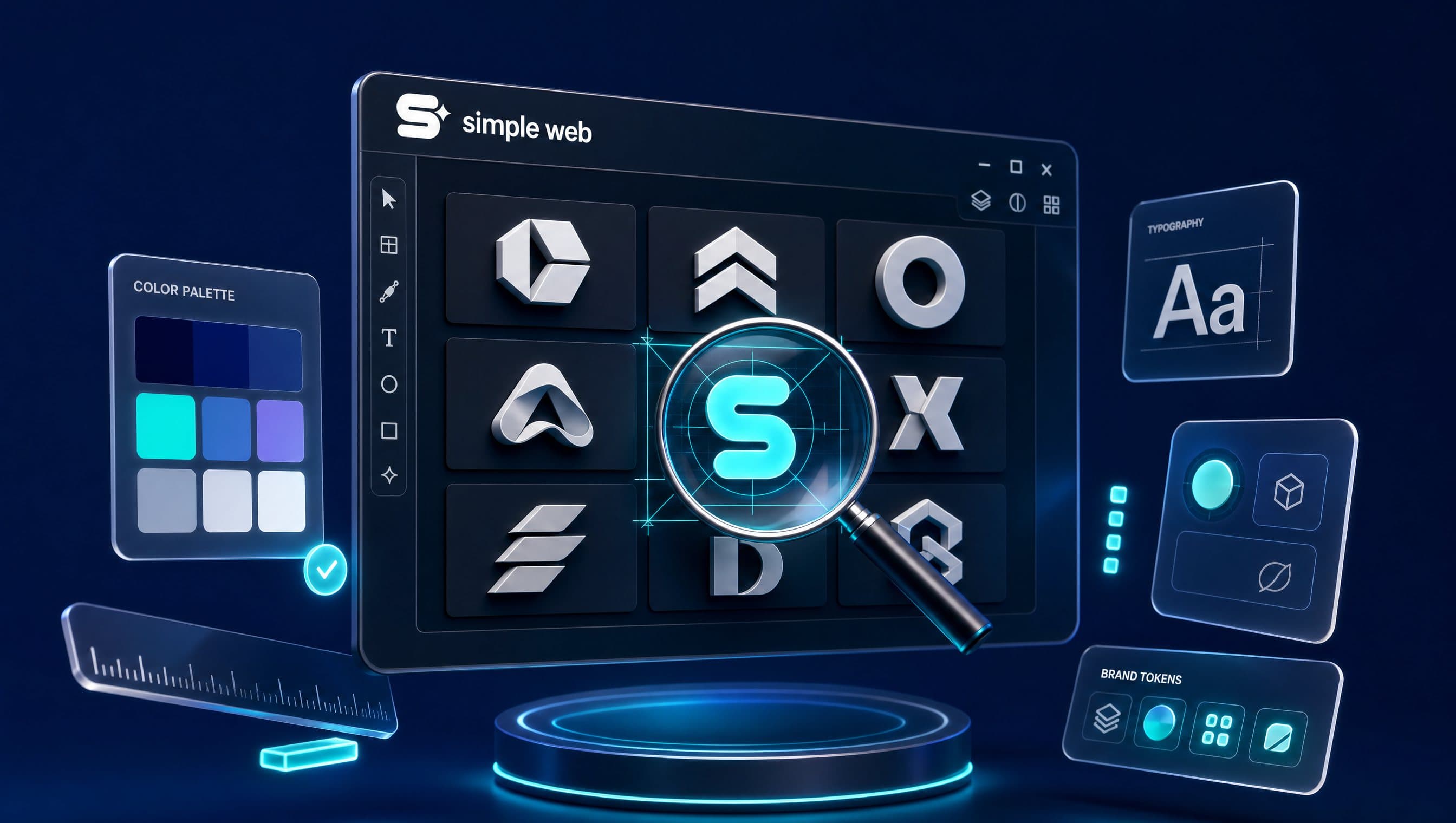
In recent years, AI logo design has transitioned from an experimental novelty into a mainstream option: type in your company name, and within minutes you are presented with dozens of generated marks. The question business owners frequently ask us is straightforward: is an AI-generated logo genuinely good enough for a commercial business, or will it lead to costly redesigns later? The honest answer is 'it depends', and in this guide we examine the reality without hype. We explore what generators genuinely do well, where they fall short (Hebrew typography, vector scalability, and trademark similarity), when an AI logo suffices, and how a hybrid workflow offers the best of both worlds.
What AI Logo Generators Genuinely Do Well
Tools such as Canva, Looka, Midjourney, ChatGPT, and Ideogram generate foundational logo concepts at speeds no human designer can match. Instead of waiting a week for three initial concepts, you can review twenty creative directions in five minutes at minimal cost. For an overview of top tools, read our guide on best AI software tools for 2026.
This accelerates two critical phases. First, ideation: you can visualize whether your brand resonates better with 'luxury', 'minimalist', or 'high-tech' aesthetics before committing. Second, briefing: it is vastly easier to provide a designer with visual references than abstract adjectives. For early-stage concepts testing market demand, AI logos offer a rapid, low-risk validation tool.
The 5 Technical Pitfalls of Pure AI Logos
1. Derivative Similarity and Trademark Overlap
AI image models are trained on massive datasets of existing logos, causing their outputs to converge on statistical averages. Two businesses entering similar prompts (e.g., 'accounting firm, blue, modern') frequently receive near-identical results. Unintentional similarity to registered trademarks creates substantial legal risks and potential cease-and-desist liabilities.
2. Non-Latin & Hebrew Font Corruption
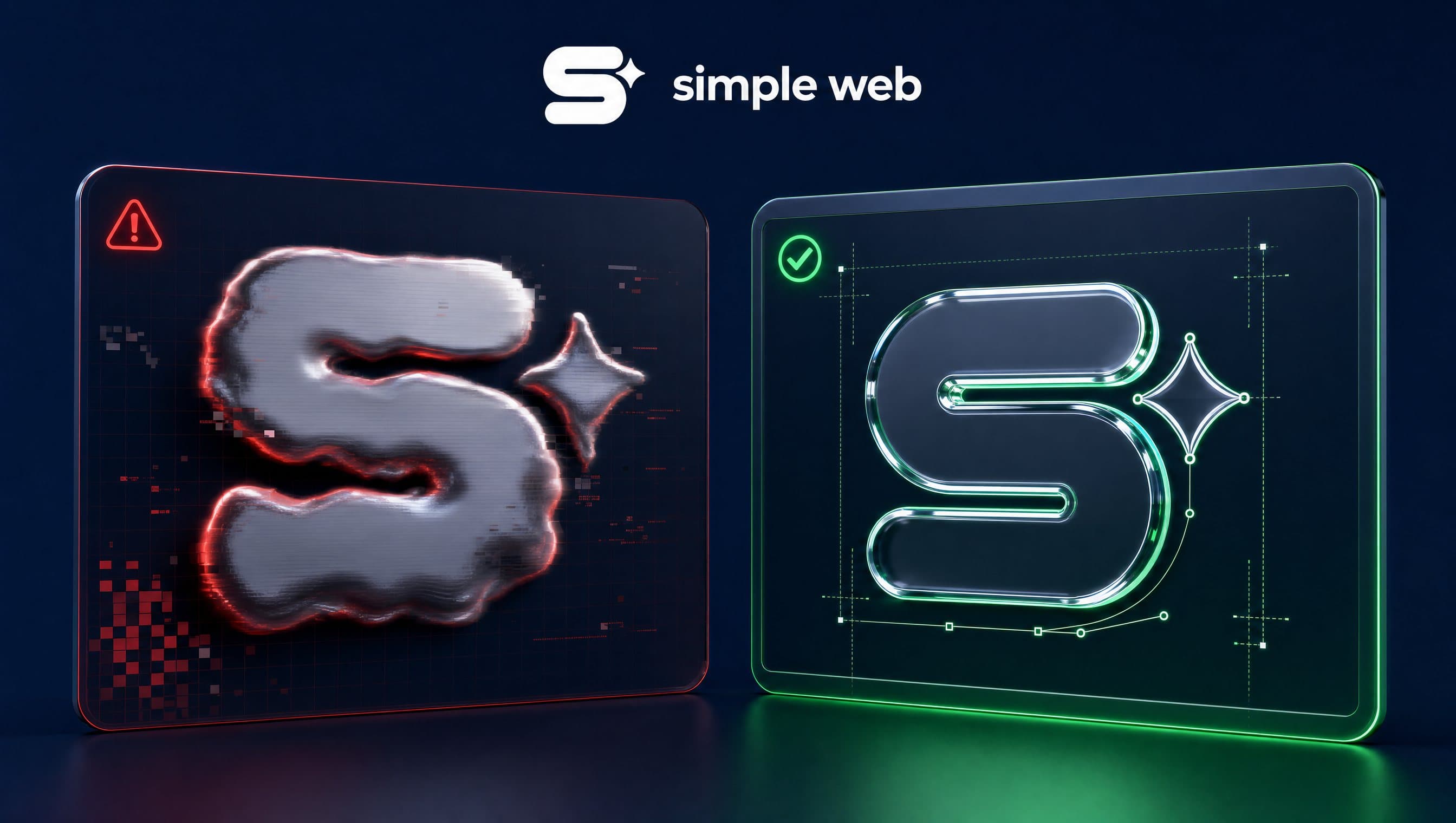
Generative AI models continue to struggle with non-Latin scripts, particularly Hebrew. Characters often appear inverted, smeared, or replaced with pseudoliterate glyphs. If your business operates with Hebrew branding, always inspect typography at scale and assemble text using verified Google Fonts.
How to test this: Scale the logo down to 24x24 pixels (standard favicon size). Letter descenders and intricate strokes are the first to distort and blur into illegibility.
3. Absence of True Vector Assets (.SVG)
Most basic AI tools output raster bitmaps (.PNG or .JPG) rather than clean vector curves. Raster graphics display acceptably on screens but pixelate heavily on vehicle wraps, storefront signage, and high-DPI print collateral. True brand kits require monochrome, inverted, and responsive horizontal/stacked vector exports.
4. Lack of a Cohesive Brand System
A standalone logo icon is not a brand identity. Without standardized color palettes, typography hierarchies, and Brand Book guidelines, marketing assets quickly become fragmented and inconsistent.
5. Commercial Licensing and IP Protection
Free AI generators often restrict commercial exploitation rights or watermark outputs. Furthermore, intellectual property laws in multiple jurisdictions remain ambiguous regarding the legal copyrightability of purely machine-generated graphics.
When an AI Logo Suffices vs. When Professional Branding Is Essential
AI Logo Generation Is Sufficient When:
- Testing a preliminary MVP or temporary landing page concept before official launch.
- Internal side projects, community initiatives, or single-day events.
- Bootstrapping with zero budget where formal branding is deferred to later growth phases.
- Assembling a visual moodboard and creative brief for a future design engagement.
Professional Branding Is Mandatory When:
- The business is actively trading with established customer recognition.
- Brand assets are deployed to physical signage, packaging, uniforms, or vehicle fleet branding.
- Operating in trust-critical industries (legal, medical, wealth management, enterprise B2B).
- Registering formal trademarks or preparing franchise expansion models.
The Hybrid Workflow: AI for Ideation, Designers for Final Execution
We recommend a balanced hybrid methodology:
- AI Ideation: Generate 20–30 directions to identify preferred shapes, colors, and iconography.
- Curated Selection: Narrow down to 2–3 favorites, noting specific elements that resonate.
- Designer Briefing: Provide the selected references as an unambiguous starting brief.
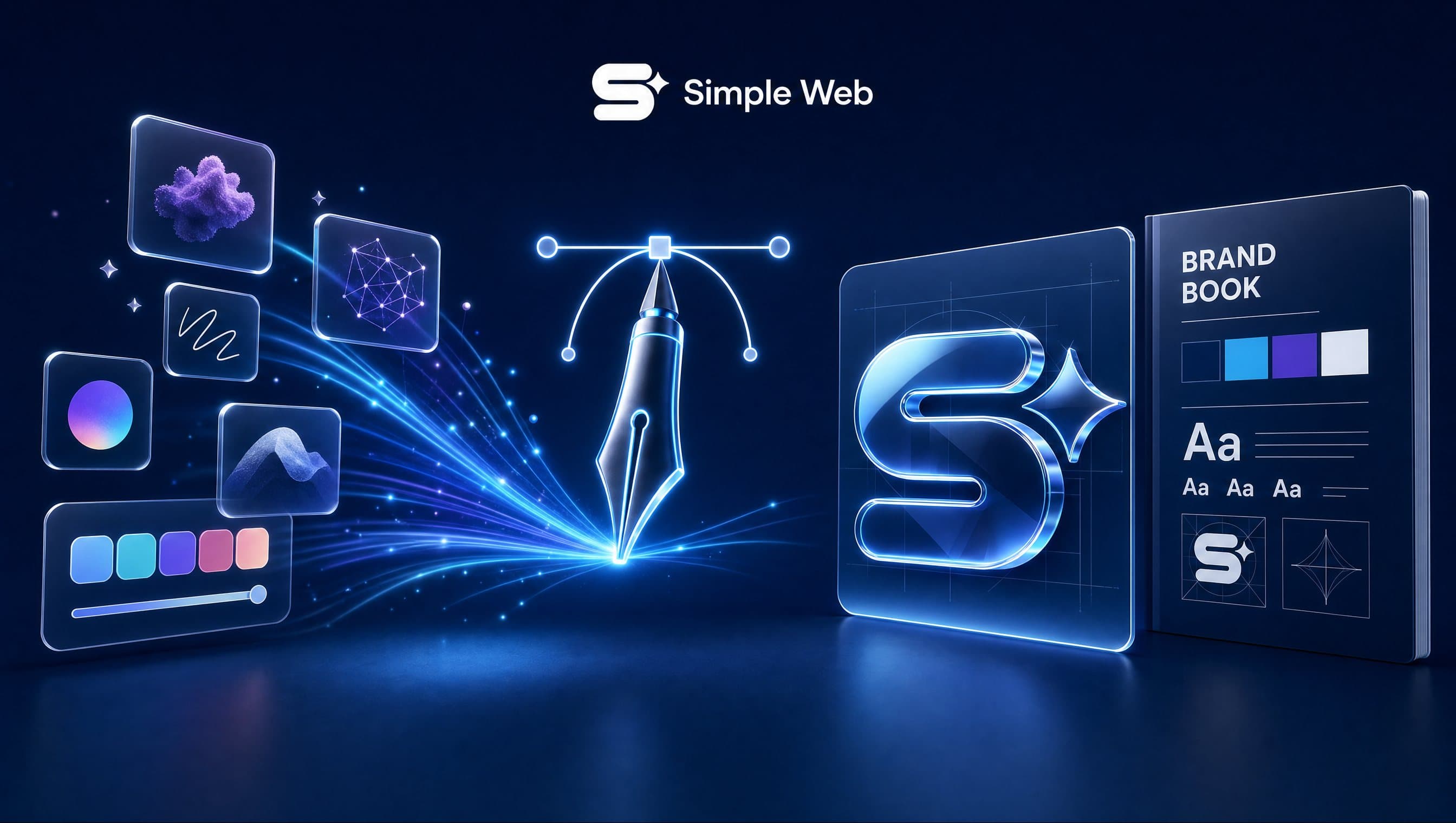
- Vector Crafting: A professional designer rebuilds the mark in Adobe Illustrator / Figma as mathematical vectors, handles typography, and produces responsive lockups.
- Brand Guidelines: Document brand tokens and usage rules in a concise Brand Book.
What We Observe in Client Audits
Many businesses that consult us with AI-generated logos have already printed them on physical materials. Our initial evaluation focuses on touchpoint mapping: identifying where the logo must appear across web, WhatsApp profiles, print, and physical signage. To eliminate Hebrew font defects, we extract the core emblem concept from AI and rebuild all typography using licensed commercial fonts, followed by complete color space and Brand Book specification over a 2–4 week cycle.
7-Point Checklist Before Adopting an AI-Generated Logo
- Monochrome Legibility: Does the mark remain distinct in solid black and white?
- Micro-Scale Recognition: Is it identifiable at 24px favicon dimensions?
- Typography Accuracy: Are all letters rendered correctly without AI artifacting?
- RTL Alignment: Does the logo lockup balance naturally on right-to-left Hebrew layouts?
- Distinctiveness Test: Does it stand out distinctly next to primary market competitors?
- Reverse Image Check: Does a Google reverse image search return near-identical existing marks?
- Vector & Licensing: Do you possess vector .SVG source files with full commercial rights?
How Simple Web Approaches Branding
Simple Web is an AI-driven digital agency based in Bnei Brak, certified Meta Partners, and Google Ads specialists serving 200+ businesses with 28 verified 5★ Google reviews. We integrate AI tools into our daily exploratory workflows while ensuring final deliverables meet professional standards. Our branding services encompass brand strategy, vector logo design, custom typography, color systems, and comprehensive Brand Books delivered within 2–4 weeks. For fast-launch ventures, a digital business card offers an immediate professional presence, and our guide on small business branding fundamentals covers the essentials.
Summary
AI logo generators are exceptional tools for rapid visual exploration but remain imperfect for final production assets. For pre-launch validation, they offer unmatched speed and affordability; for established businesses with long-term brand equity, the hybrid model delivers the ideal blend of generative speed and professional vector polish. Contact Simple Web today to schedule a free brand diagnostic consultation.
Tags:
Recent posts