
Brand Book Guide: What It Is, What Belongs in It, and Why Small Businesses Need One
A Brand Book is your single source of brand truth: logo rules, color palettes, Hebrew typography, tone of voice, and marketing templates. Learn what must be included and how it saves money.
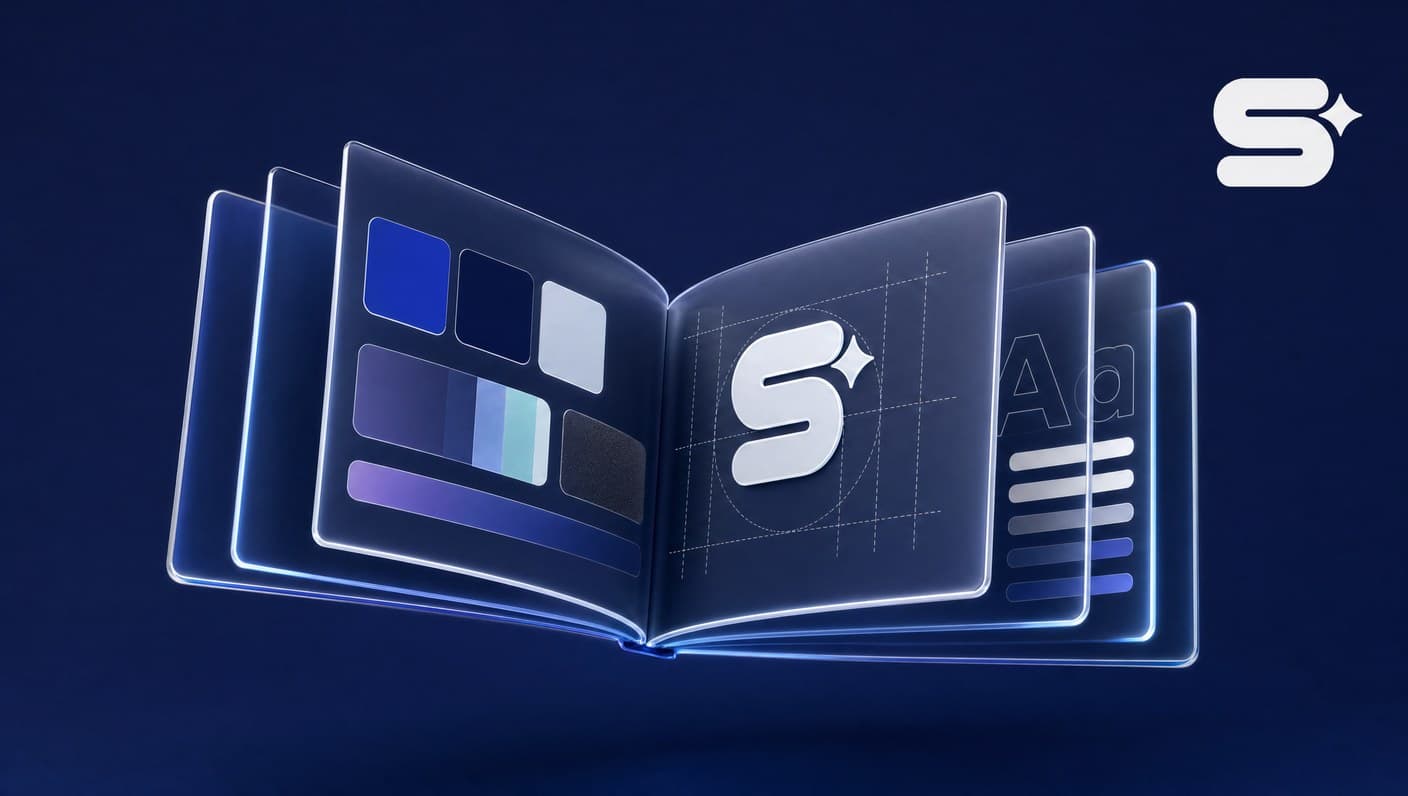
A Brand Book is the definitive document that answers the question “how should this look?” before anyone even asks. Without clear brand guidelines, every new designer, freelance copywriter, and social media manager will reinvent your visual identity from scratch. Within a year, you end up with five conflicting shades of your brand color and three mismatched typefaces across your collateral. In this guide, we break down what must be included in a Brand Book, what small businesses can safely omit, how it saves tangible money on every marketing campaign, and how to build a high-impact single-page Brand Sheet even on a bootstrap budget.
What Is a Brand Book, and Why It Is Not Just for Enterprises
A Brand Book (or brand guidelines document) consolidates every strategic decision about how your company looks, sounds, and behaves into a single reference source. When creative debates arise between marketing and design vendors, the Brand Book is the final arbiter. Related terms include style guides and visual identities. While visual identity covers graphical assets (logo, colors, typography, imagery), a complete Brand Book adds strategic pillars, mission values, and tone-of-voice rules. Meanwhile, a Design System is a developer-centric UI component library for web and mobile apps, built on top of the Brand Book.
The belief that Brand Books are solely for massive corporations is mistaken. Large corporations maintain in-house design teams with institutional memory. Small businesses, in contrast, constantly outsource across different web designers, social agencies, print shops, and performance media buyers. Each vendor starts from zero unless provided with clear guidelines. A concise brand reference eliminates onboarding friction. For foundational branding strategy, review our guide on branding for small businesses.
The 7 Essential Chapters of a Comprehensive Brand Book

1. Brand Core & Strategic Positioning
1–2 pages defining what the business does, target demographics, value propositions, and core personality attributes (e.g., direct, approachable, precise). This context guides all downstream visual choices.
2. Logo System & Usage Rules
All approved orientations (horizontal, vertical, standalone icon/mark), minimum clear space boundaries, minimum display sizes, and an explicit “do not do” list: do not distort aspect ratios, do not apply unapproved drop shadows, and do not alter color values.
3. Color Palettes & Color Theory
Primary brand colors, secondary accents, and background neutrals with exact HEX, RGB, and CMYK codes. Include usage ratios (e.g., 60% white space, 30% navy, 10% electric cyan) and accessibility contrast standards to ensure web readability.
4. Typography & Multi-Script Font Hierarchies
Headlines, subheadings, and body fonts for both Hebrew and English text, complete with size and line-height scales. In bilingual Israeli markets, pairing Hebrew and Latin typography with matching visual weights is essential. Always link to font repositories like Google Fonts with commercial licenses.
5. Photography, Icons, and Visual Assets
Art direction guidelines for photography (natural lighting, authentic team imagery vs. stock), icon sets (line vs. solid fill), and negative visual constraints. Providing 5 clear visual dos and don'ts prevents off-brand asset selection.
6. Voice, Tone, and Copywriting Guidelines
How the brand speaks in written communications: formal vs. conversational, first-person vs. plural, emoji usage policies, and prohibited industry jargon. Real-world messaging examples work best for social and customer support.
7. Production Templates & Deliverables
Business cards, email signatures, social media post templates, pitch decks, and web UI components. This transforms abstract principles into ready-to-use production files.
The Small Business Alternative: A 1-Page Brand Sheet
If you do not have the budget for a 40-page corporate manual, a streamlined 1-to-3 page Brand Sheet solves 90% of visual consistency problems. Your Brand Sheet should include:
- Logo Assets: Primary color, solid black, and reversed white versions with minimum sizes.
- Color Swatches: 4–5 core brand colors with HEX and CMYK values.
- Typography Pairings: 2 font families (Headings and Body) with direct download links.
- Personality Traits: 3 keywords describing what the brand is, and 3 words it is not.
- Visual Reference Moodboard: 5 sample graphics or photos representing the intended aesthetic.
You can assemble this in an evening using Canva or Figma based on existing logo assets. Store it in a shared cloud folder accessible to all team members and contractors.
How a Brand Book Saves Real Money on Campaigns and Design
The true ROI of a Brand Book appears every time a new creative touches your brand:
- Faster Creative Briefing: Send a single link instead of re-explaining your aesthetic preferences for hours.
- Eliminated Revision Cycles: Eliminate avoidable back-and-forth about incorrect hues or wrong fonts.
- Compounded Brand Recognition: Seeing consistent branding across social ads, your business website, and collateral builds lasting trust.
- Optimized Generative AI Workflows: Supplying ChatGPT or Midjourney with exact hex codes and tone constraints produces significantly better, on-brand outputs.
- Preventing Premature Redesigns: Businesses often rebrand unnecessarily simply because inconsistent execution eroded their visual identity over time.
A modest one-time investment in brand documentation pays for itself by the second or third outsourced project, especially when running omnichannel social media marketing.
Common Brand Book Mistakes to Avoid
- Overly Theoretical Manuals: An unread 80-page PDF is useless compared to a concise 3-page guide everyone actually uses.
- Static PDF Lock-In: Maintain living guidelines in Figma or Notion so color or font updates propagate instantly.
- Lack of Local Language Examples: English-only templates fail to address RTL alignment and Hebrew typography nuances.
- Missing Prohibitions: A clear “what NOT to do” section prevents more errors than positive guidelines alone.
- Neglecting Maintenance: Update the guide immediately whenever new channels, fonts, or product lines launch.
What We Observe in the Field
When businesses approach us for branding, our initial request is to audit all active assets: existing logo files, collateral, recent social creatives, and email signatures. Invariably, we discover multiple mismatched color codes and orphaned fonts. Our branding methodology follows a structured sequence: market research, logo architecture, typography and palette engineering, visual system design, and living Brand Book delivery in Figma over a 2–4 week timeframe.
How Simple Web Delivers Brand Excellence
Simple Web is an AI-powered digital agency based in Bnei Brak, certified Meta Partners, and Google Ads specialists serving 200+ businesses with 28 verified 5★ Google reviews (learn more on our about page). Every branding project we deliver culminates in an actionable Brand Book tailored for real-world execution. Because our team also engineers high-performance websites, paid ad campaigns, and video assets, our brand guidelines are built by practitioners for seamless production use.
Summary
A Brand Book is not an enterprise luxury; it is the most cost-effective tool for maintaining consistency across multiple team members and vendors. It defines your core identity, logo parameters, color codes, bilingual typography, and templates. Start with a single page and expand as your operations scale. Schedule a free discovery consultation with our team to evaluate and elevate your brand identity.
Tags:
Recent posts