
Digital Business Card for Jewelers: The Marketing Tool That Brings In Referrals
How a digital business card for jewelers turns every buyer into referrals: gallery, video, WhatsApp, QR in the box, NFC on the counter, and what to avoid.
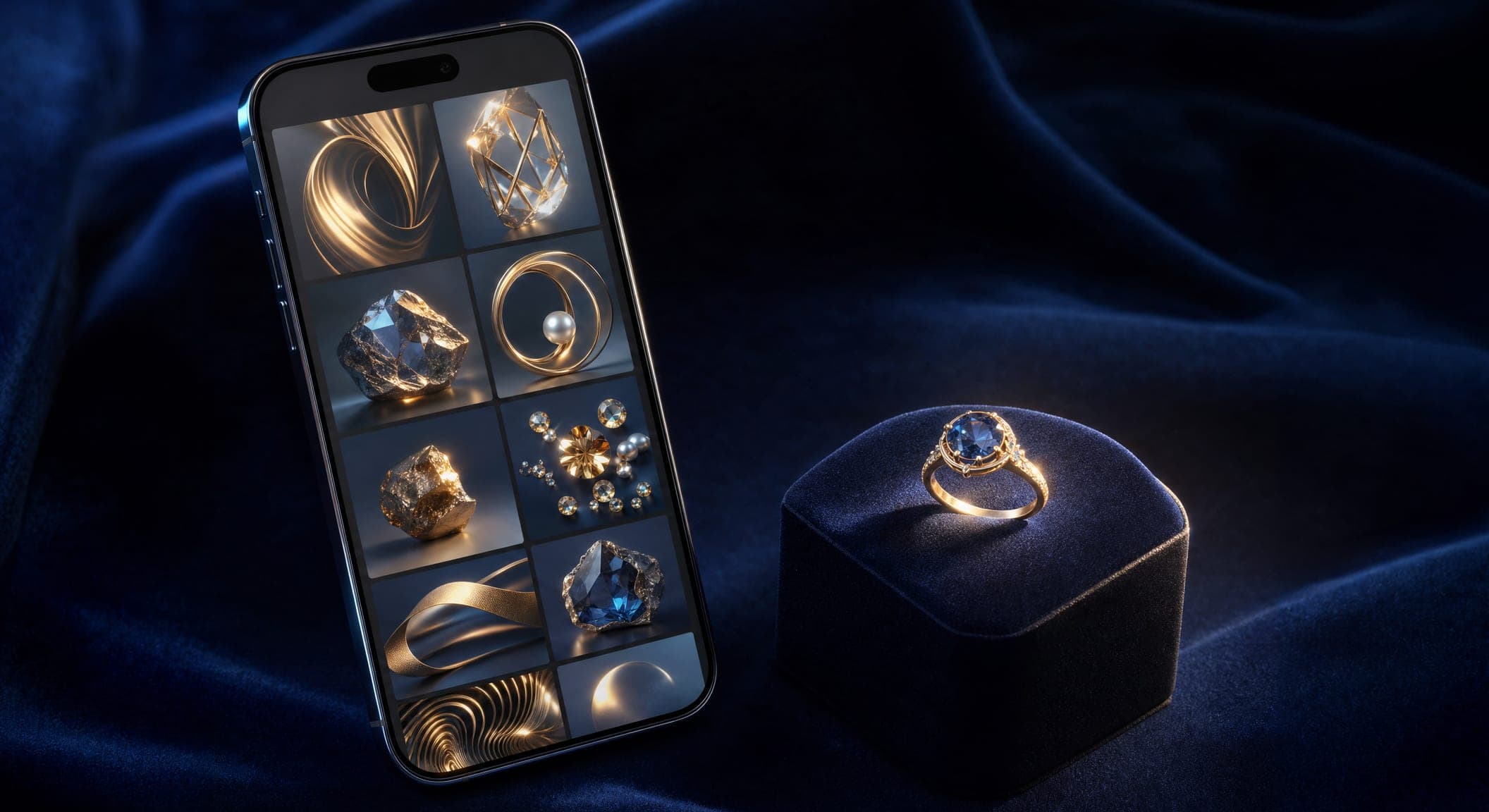
The jewelry business is built on trust and on memory. A customer who bought an engagement ring from you won't remember your studio's name half a year later, but her friend will still ask, "Where did you buy it?" If there's no way to get back to you in a click, the referral is lost. A digital business card for jewelers closes exactly that gap: the jewelry stays front and center, and the card makes sure anyone who saw it can find you with a single tap. In this article we'll explain why jewelers in particular need one, what the card must include, how it fits in with your store or studio, and which mistakes to avoid.
Why Jewelers in Particular Need a Digital Card
Jewelry sells mainly by word of mouth, and customers' memory for a designer's name is short. They hear about "Dana's studio" on Saturday, and by Sunday the name is forgotten. A digital business card solves this: along with the piece, every buyer gets a link (on WhatsApp, through a QR code on the packaging, or with a tap on an NFC card), and from that moment on, you're in their phone. When a friend asks, sharing takes three seconds.
Store owners have another dimension: exhibitions and events. Instead of handing out hundreds of paper cards that end up in the trash, you share a QR code that brings visitors into your brand's world, with photos, a video and promotions. How all of this works technically is explained in our complete guide to digital business cards.
What a Jeweler's Digital Business Card Must Include
Jewelry is an entirely visual field, so the card has to look excellent, not just hold contact details:
- A professional gallery. 6–12 photos of your work, shot in a studio, with a clean background and soft lighting. Ordinary phone photos hurt the brand. If you use AI tools for editing or backgrounds, it's worth reading about creating AI images for business marketing first, and what's allowed.
- A short video (15–30 seconds). Your process in the studio, polishing a stone, fitting a ring. A video conveys the maker's hand in a way a photo can't.
- Your brand story in two or three sentences. Why you started, what style you represent.
- WhatsApp as the main button. Jewelry requires a conversation: personal adjustments, custom orders, sizing.
- A link to Instagram. That's where customers discover jewelers, and where they check you out before reaching out.
- A map to your studio or store. One-tap navigation, if you have a physical location.
- A custom order form. Metal type, stone, budget, date. The lead arrives structured instead of as a general conversation.
How It Fits In with Your Store or Studio
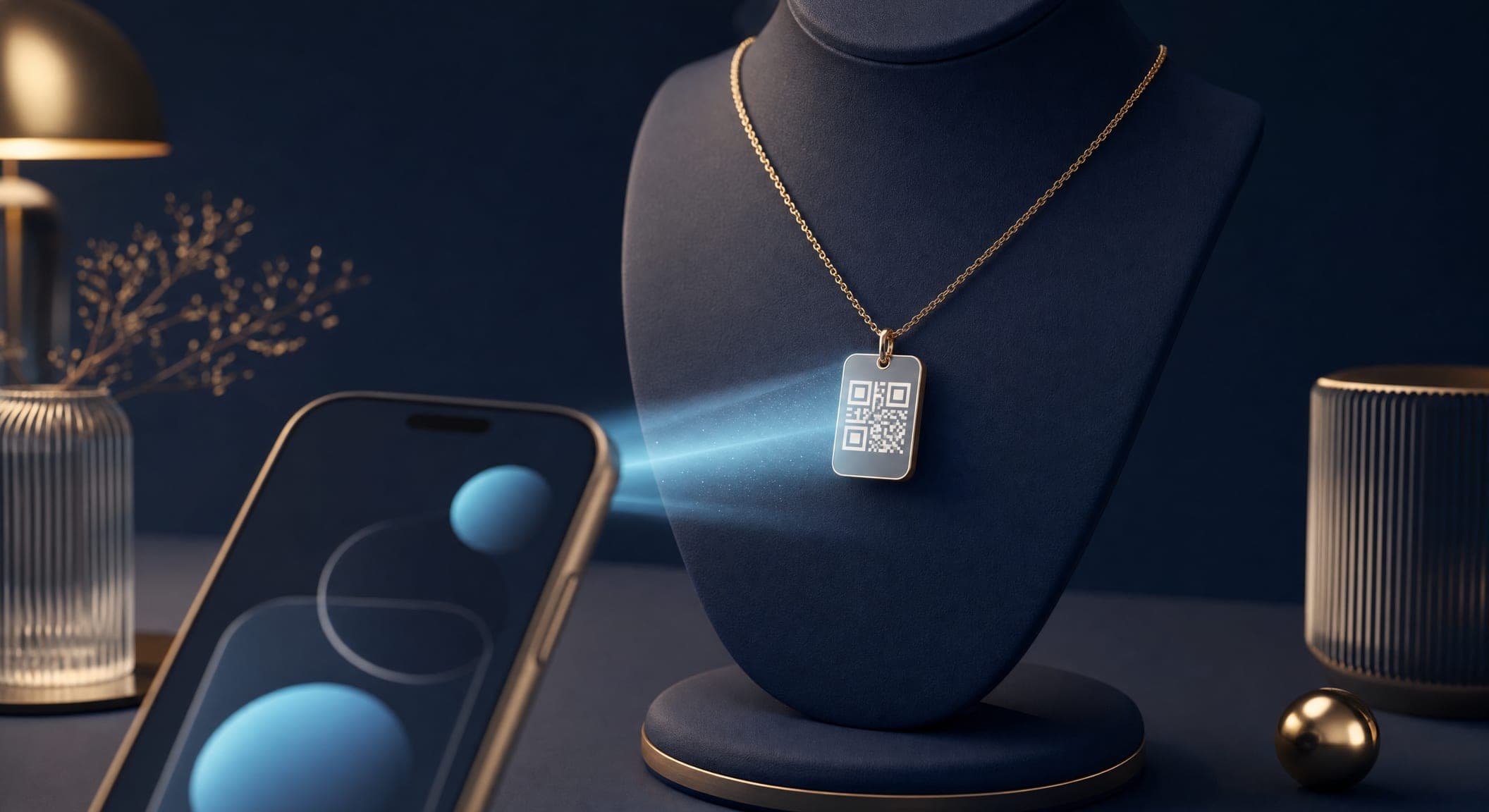
The link between the physical and the digital is where smart jewelers come out ahead:
Packaging. In every box that leaves the studio, a small physical card with a QR code. Whoever opens the box on a birthday evening scans it, lands on the gallery, and shares it with the person sitting next to them.
Exhibitions and fairs. Instead of a stack of paper cards, one NFC card on the counter. Anyone who taps their phone on it saves your details.
Collaborations. Do you work with a stylist or an event designer? Instead of a verbal recommendation, they share your card in a click, gallery and form included.
Mistakes to Avoid
Low-quality photos. With jewelry, the difference between phone photography and studio photography is instantly visible. Professional photography on the market usually costs anywhere from a few hundred to a few thousand shekels per session, depending on scope (an estimate), and it's a one-time investment that also serves your website and your Instagram.
No indication of price at all. You don't have to price every item, but a "from" price or a range per category filters out unsuitable inquiries and saves time.
Not updating. A digital card is a living document. A gallery from last year doesn't look fresh. Update it every two months: new pieces go in, old ones come out.
What a good card looks like for a visual business, alongside nine other professions, is in our article on digital business card examples.
What Simple Web does about it
We build digital business cards under the Studio 51 brand, with a dedicated template for jewelry: a gallery, a video, WhatsApp, navigation, social links and a form that goes straight to your CRM. For visual businesses we've also built full stores, for example for Gabriela Art, and when the time comes for an online store, the card and the store sit under the same brand.
The cards are built with AI, and people on our team check the gallery, the buttons and the form before a card goes out. The price is set according to the design and scope, in a quote after a short call. Simple Web is an AI-first marketing agency from Bnei Brak, certified Meta partners and Google advertising experts, with 200+ clients and 28 five-star Google reviews.
In summary: a jeweler without a digital business card is leaving referrals on the table. The card brings a gallery, a video, a contact channel and a form together in one place, reaches customers through the packaging, the counter and WhatsApp, and gets updated without reprinting. Want to see an example of a card in your style? Get in touch with us.
Sources
- Instagram for Business — an Instagram business profile, and linking from it to your card
Tags:
Recent posts