
12 Small Website Changes That Boost Conversions (CRO Checklist)
More leads from the same traffic, without a new site: 12 small changes to your website and lead form, ranked by effort vs. impact, and how to verify each one.
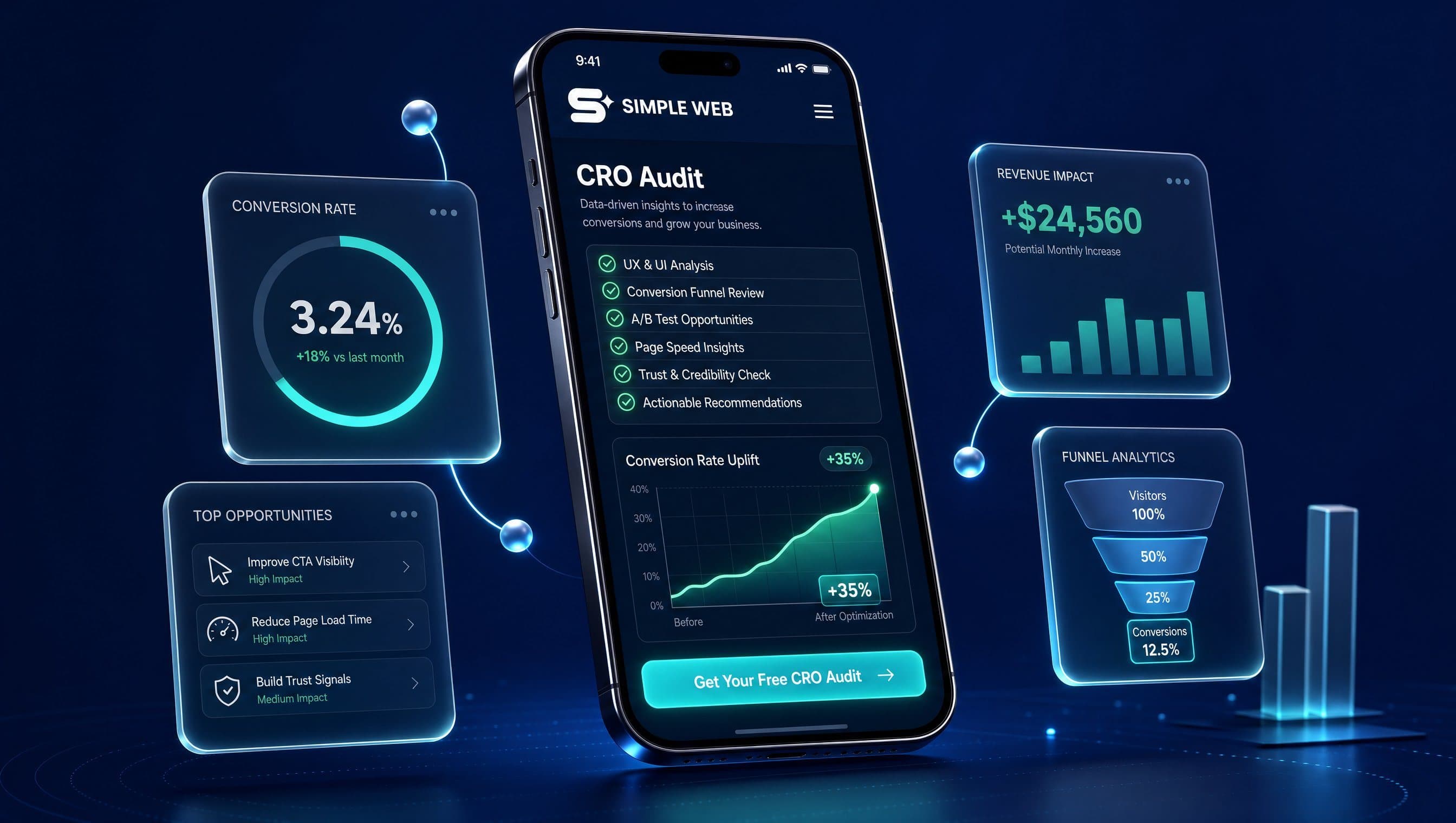
Conversion Rate Optimization (CRO) is the most cost-effective way to generate more leads from your existing website traffic without spending an extra shekel on advertising. Yet most businesses that feel their website isn't delivering leads rush straight to increasing their ad budget or commissioning a complete website redesign. Before taking drastic steps, there are 12 small, actionable changes you can make to an existing website—most taking between an hour and a single day of work. In this comprehensive guide, we break down each change, ranked by effort versus impact, explaining why it works and how to verify that it produced real results for your business.
What is Conversion Rate Optimization (CRO), and Why It Beats Buying More Traffic
Conversion Rate Optimization is the systematic process of improving your website so a higher percentage of visitors take your desired action—whether that means submitting a lead form, making a phone call, sending a WhatsApp message, or completing a purchase. The math is straightforward. Consider a realistic scenario: suppose your landing page attracts 3,000 monthly visitors at an advertising cost of ₪4,500, with a 2% conversion rate. That yields 60 leads at ₪75 per lead. If you improve your conversion rate to 3%, you receive 90 leads at ₪50 per lead—on the exact same ad budget. To achieve those same 90 leads purely by increasing ad spend, you would have to spend ₪6,750 per month.
This is why CRO should almost always precede any budget increases. To understand what constitutes a healthy conversion rate benchmark in your specific industry and how to calculate it accurately, read our guide on website conversion rate benchmarks.
Before Changing Anything: Three 30-Minute Diagnostic Checks
Effective conversion optimization begins with data-driven diagnosis, not guesswork. Three rapid checks can save you weeks of trial and error:
- Is conversion tracking fully operational? If WhatsApp button clicks and phone calls are not tracked as primary key events, your low conversion rate is an illusion. Review our complete conversion tracking setup guide before touching site code.
- Where is the bottleneck: mobile or desktop? In GA4, segment your conversions by device category. For the vast majority of Israeli business websites, over 70–80% of traffic arrives via mobile devices, where conversion rates are typically lower. Most of the improvements on this checklist prioritize the mobile user experience.
- What are visitors actually doing? Free session recording and heatmap tools like Microsoft Clarity reveal within 48 hours where visitors click, where they get stuck, and where they abandon forms. Watching ten real user session recordings provides more insight than ten internal opinions.
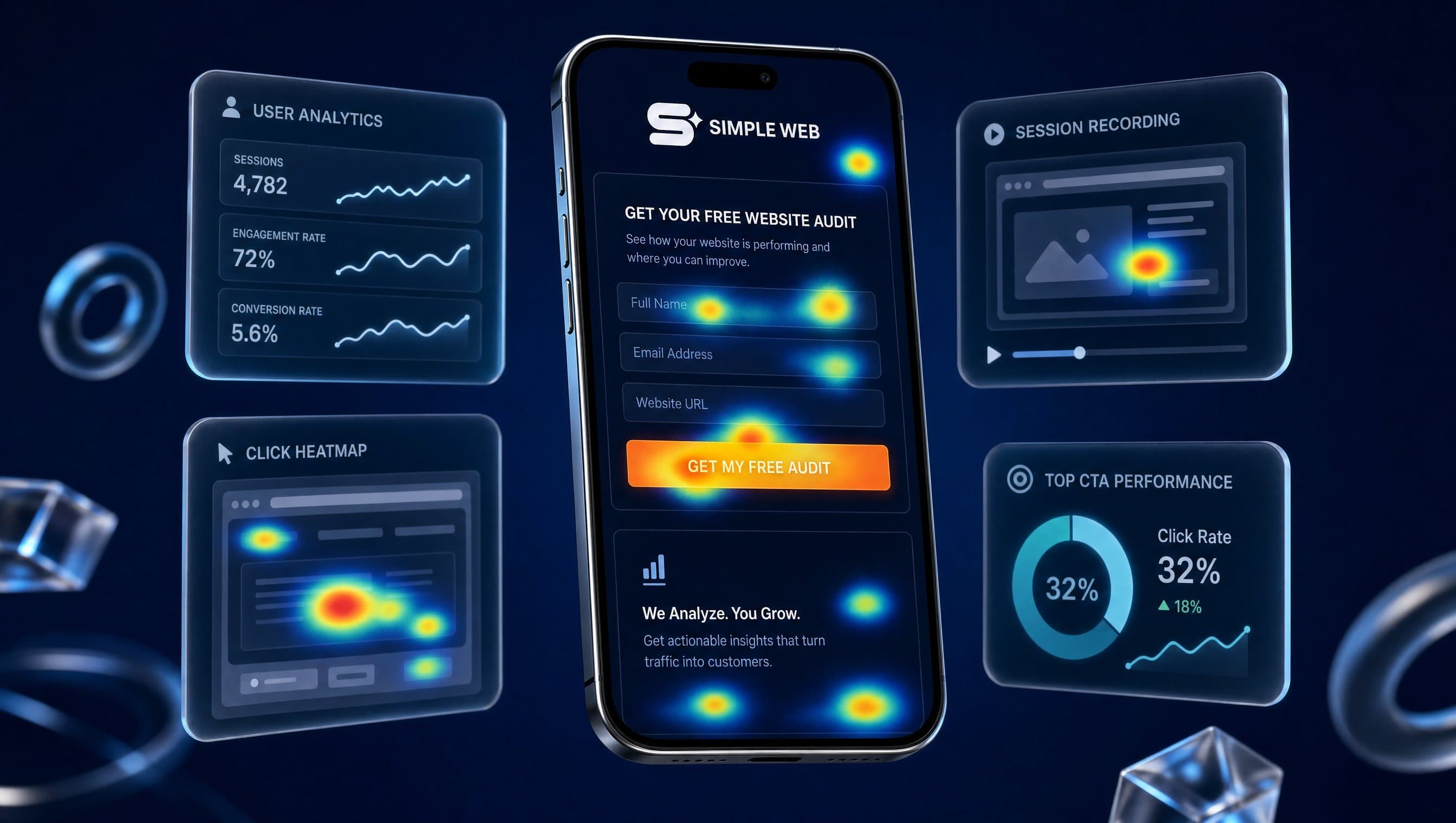
How to test this yourself: Open GA4 in the Realtime report while tapping the WhatsApp button on your live site from your mobile phone. Within 60 seconds, an event with a clear identifier (such as whatsapp_click) should appear and be marked as a key conversion event. If it doesn't, your reported conversion rate fails to capture the single most common customer inquiry channel in Israel.
What We See in the Field
During diagnostic audits for existing websites, we run these three checks in strict order: first tracking integrity, then device breakdown, and finally session recordings. In our experience, the single most common finding is a website labeled 'non-performing' that is actually generating substantial inquiries via phone and WhatsApp that simply went unrecorded. The second most frequent defect: a lead form with seven mandatory fields built to save a phone conversation. We no longer recommend a new website on the initial call; instead, we implement the one-hour fixes, measure for two weeks, and only proceed to structural overhauls if numbers remain flat.
The Checklist: 12 Small Changes Ranked by Effort vs. Impact
We have organized this checklist by required execution time, starting from quick one-hour wins to multi-day enhancements.
1-Hour Changes
1. Floating WhatsApp Button in the Optimal Position. On mobile screens, pin a permanent floating WhatsApp action button to the bottom corner. Ensure it never obstructs the form submission button. Pre-fill a welcoming conversation starter (e.g., 'Hi, I arrived from your website regarding...') to minimize user friction. Verification: compare WhatsApp click counts seven days before and seven days after deployment.
2. 3-Field Lead Capture Form. Name, phone number, and a single qualifying dropdown question. Every additional field creates friction and reduces completion rates. Gather project-specific details during the initial phone consultation. Verification: monitor form start vs. submit completion rates in GA4 or Clarity.
3. Single Above-the-Fold CTA on Mobile. 'Get a Quote' or 'Chat on WhatsApp'—never five competing buttons at once. A single clear call to action visible immediately without scrolling maximizes clarity. Verification: review above-the-fold heatmap engagement.
4. Transparent Starting Prices or Ranges. Stating 'Starting from ₪X' or 'Typical projects range between X and Y' qualifies interested prospects and reassures serious buyers. Visitors who cannot find pricing often assume services are unaffordable. Verification: measure lead qualification rates and sales conversion, not just raw volume.
1-Day Changes
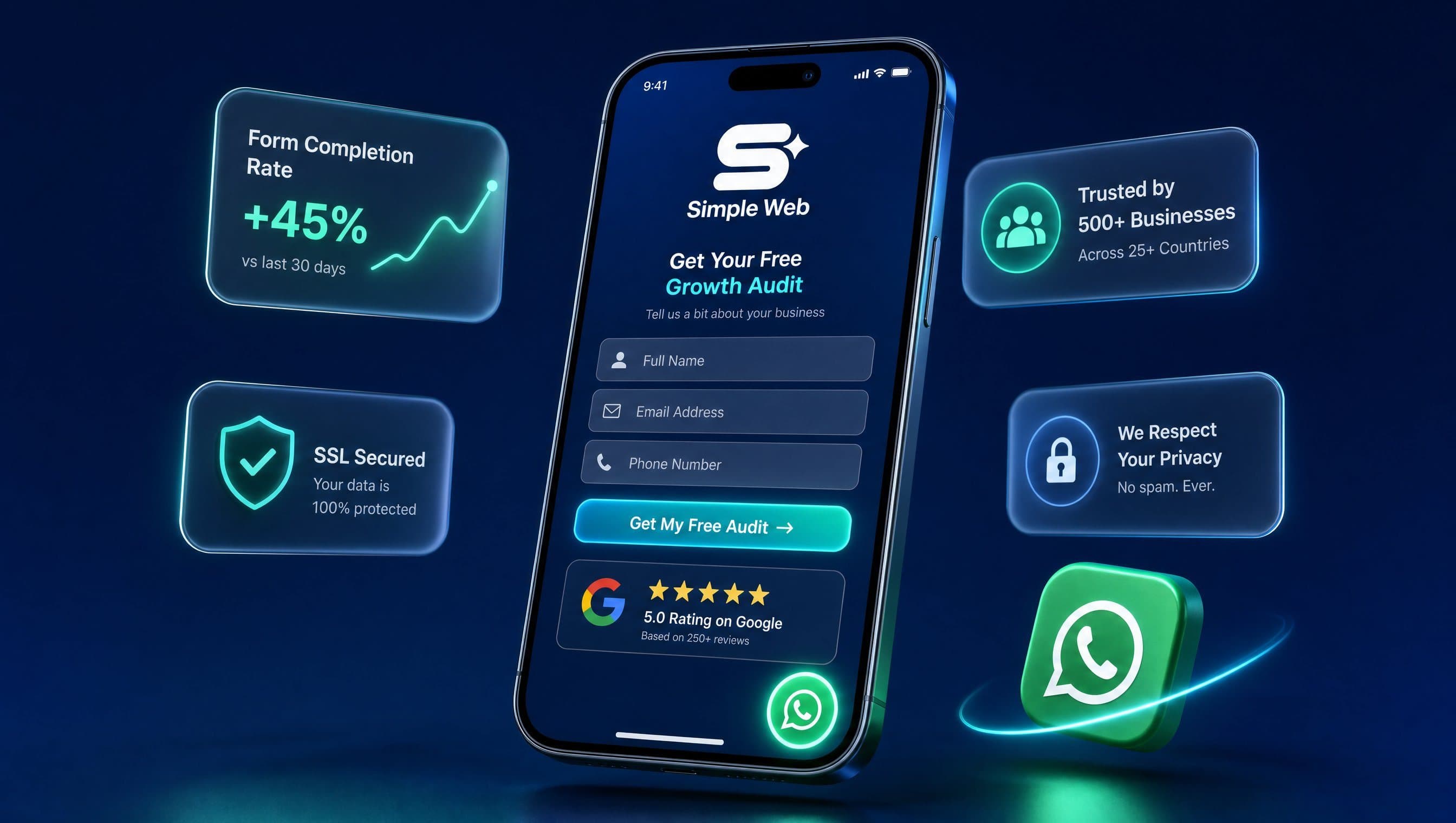
5. Trust Strip Directly Below Action Buttons. Showcase Google reviews (5★ ratings), client logos, years in business, and a verified physical address within one scroll of the primary button. Proof belongs adjacent to the action, not buried on an 'About' subpage. Verification: run an A/B test comparing form submissions with and without trust badges.
6. Authentic Photography Over Generic Stock Imagery. Real team members, actual workspace environments, and genuine project deliverables. Websites relying on generic corporate stock photos look interchangeable, eroding visitor trust. Verification: observe average engagement time and bounce rate per landing page.
7. High-Clarity Headline Formula (Offer + Audience + Location). A headline like 'Commercial HVAC Installation in Sharon Area Within 48 Hours' vastly outperforms generic phrases like 'Welcome to Our Company'. Visitors decide within 3 seconds whether they are in the right place. Verification: check bounce rates by acquisition source.
8. High-Performing Thank-You Page. Immediately following form submission, clearly explain what happens next, expected callback timeframe, and provide a direct WhatsApp link for urgent inquiries. A distinct thank-you URL also provides the cleanest conversion tracking pixel trigger. Verification: track the percentage of form leads who also initiate a direct WhatsApp conversation.
9. Mobile Page Load Speed Optimization. Compress oversized imagery, eliminate redundant plugins, and streamline fonts. Test via PageSpeed Insights: a green mobile score is essential, as Core Web Vitals serve as direct Google ranking factors. Verification: compare mobile PageSpeed scores and mobile bounce rates before and after optimization.
1-Week Changes
10. Polite, Non-Intrusive Exit-Intent Modals. On desktop, trigger a polite modal when the cursor moves toward closing the browser tab (offering a free guide, discount, or callback request). On mobile, use a subtle bottom slide-in rather than disruptive popups. Verification: track the conversion rate of the exit offer while verifying overall site bounce rate remains unaffected.
11. After-Hours Automated Chatbots. A significant percentage of web traffic browses in the evening and weekends. An intelligent AI chatbot that answers foundational questions, captures contact details, and routes them to team members in the morning prevents lead loss. Learn more about our implementations on our AI chatbots and automations service page. Verification: compare lead volume generated during non-business hours before and after launch.
12. Single-Variable A/B Testing. Test one hypothesis at a time—headline, hero visual, or button text—never all three simultaneously. Meaningful results require hundreds of conversion events per variant; for lower-traffic sites, sequential two-week period comparisons are more reliable. Verification: document hypothesis, sample size, and conversion delta systematically.
How to Accurately Measure If Your Changes Succeeded
In conversion optimization, single adjustments rarely triple results overnight. Meaningful growth comes from compounding marginal gains across the entire user journey. To measure performance rigorously:
- Compare Equal Time Periods: Measure two comparable weeks (e.g., Tuesday–Monday) with matching advertising budgets and campaign parameters. Avoid comparing holiday periods to regular work weeks.
- Segment by Device and Channel: Mobile UX improvements should directly move mobile conversion rates; desktop numbers serve as a control group.
- Track Lead Quality, Not Just Quantity: A 30% surge in unqualified leads who never answer the phone is a net negative. Cross-reference lead data with your CRM monthly revenue records.
- Isolate One Variable at a Time: Test single variables sequentially so you can identify exactly what drove the uplift and replicate the winning pattern.
With enough traffic you can also run a controlled test. How many visitors that takes, and what to do on a small site, is covered in A/B testing on a small website: how many visitors you really need, and what to do without enough traffic.
Common CRO Mistakes to Avoid
- Defaulting to a Full Website Redesign: A brand-new website is sometimes warranted, and the five signs your website needs an upgrade are clear. However, the 12 targeted adjustments above cost significantly less and deploy in days.
- Blindly Copying Generic US Benchmarks: Israeli consumers have distinct behavioral preferences: they strongly favor WhatsApp over traditional email forms, direct phone calls, and clear upfront pricing over 'Contact Us for a Quote'.
- Optimizing Pages Receiving Irrelevant Ad Traffic: If ad targeting delivers unqualified clicks, no on-page optimization will generate conversions. Align ad copy tightly with landing page promises as detailed in our guide to building a landing page that converts.
- Aggressive Instant Popups on Mobile: Modals that block content upon initial page load frustrate visitors and trigger search engine penalties. Trigger overlays only after meaningful scroll depth or exit intent.
How Simple Web Drives Conversion Results
Simple Web is an AI-powered marketing agency based in Bnei Brak, Israel. As certified Meta Partners and Google Ads specialists managing 200+ active business accounts with 28 verified 5★ Google reviews (discover more on our About page), our custom-built landing pages come pre-engineered with these best practices: single-focus messaging, streamlined forms, mobile-first responsive architecture, and bulletproof conversion tracking. Client sites consistently achieve green Core Web Vitals and A+ performance scores. Every website order includes 6 months of complementary SEO content articles (₪4,500 value). For existing websites, our complimentary audit starts with this exact diagnostic checklist.
Summary
Conversion Rate Optimization does not require starting from scratch or doubling your ad budget—it requires disciplined execution. First verify that your analytics tracking captures every lead channel, then execute rapid one-hour adjustments (WhatsApp, 3-field forms, clear CTAs, upfront pricing). Progress to trust elements, authentic photography, headlines, and mobile performance, before experimenting with chatbots and A/B testing. Would you like our team to audit your website using this framework? Contact Simple Web today for a free diagnostic consultation.
Tags:
Recent posts