Business Card for a Lawyer in 2026: A Comprehensive Guide, Physical vs. Digital, and Examples
What a lawyer's business card must include, when to go physical and when digital, design that signals trust, six common mistakes and examples to learn from.
Most searches for a lawyer start on Google these days, and yet a business card for a lawyer is still the first tool that comes out at an introductory meeting, a professional conference or after a court hearing. A quality card signals credibility, a serious practice and attention to detail, exactly what a client expects to find in their lawyer. In this article we explain what must appear on a lawyer's business card, when a physical card is better and when a digital business card for a lawyer is the better choice, what design that signals professionalism looks like, which six mistakes come up again and again, and what you can learn from the good examples.
What must be on a lawyer's business card
A lawyer's business card is a professional statement. The fields look simple, but every detail carries weight:
- Full name with the title (Adv.), and if relevant, an additional academic degree as well.
- Practice area: family law, real estate, criminal, employment. One or two areas, not a list.
- Firm details: the firm's name, address, direct phone number and an email on the firm's domain (not a personal Gmail).
- Website address, and if you have an up-to-date LinkedIn profile, that too.
- License number with the Israel Bar Association: not required on the card, but it signals seriousness to a client who doesn't know you.
What not to add: awards from years gone by, over-the-top marketing slogans, and a personal phone number you don't want ringing at 23:00. In this field, modesty and precision are part of the message.
Physical vs. digital: which is better in 2026
The answer is both, because each one serves a different situation. A physical card belongs to the moment: a first meeting, an event, a conference. It leaves a memory in the client's hand and works as an anchor. The downside: it gets lost, and you can't call from it with a tap.
A digital business card for a lawyer solves exactly that. You send it on WhatsApp, by email or by SMS, the client saves it to their contacts, and every way to reach you is one tap away. It can include a short video of the firm, a WhatsApp Business button, a link for booking a meeting, and your practice areas with a link to the relevant page on your website. How all of this works technically, including the difference between NFC and QR, is explained in the complete guide to digital business cards.
The model that works for most firms: a quality physical card that serves as the "experience," with a QR code that leads to the expanded digital card. That way the meeting gets the professional impression, and the follow-up gets the digital convenience.
Design that signals credibility and professionalism
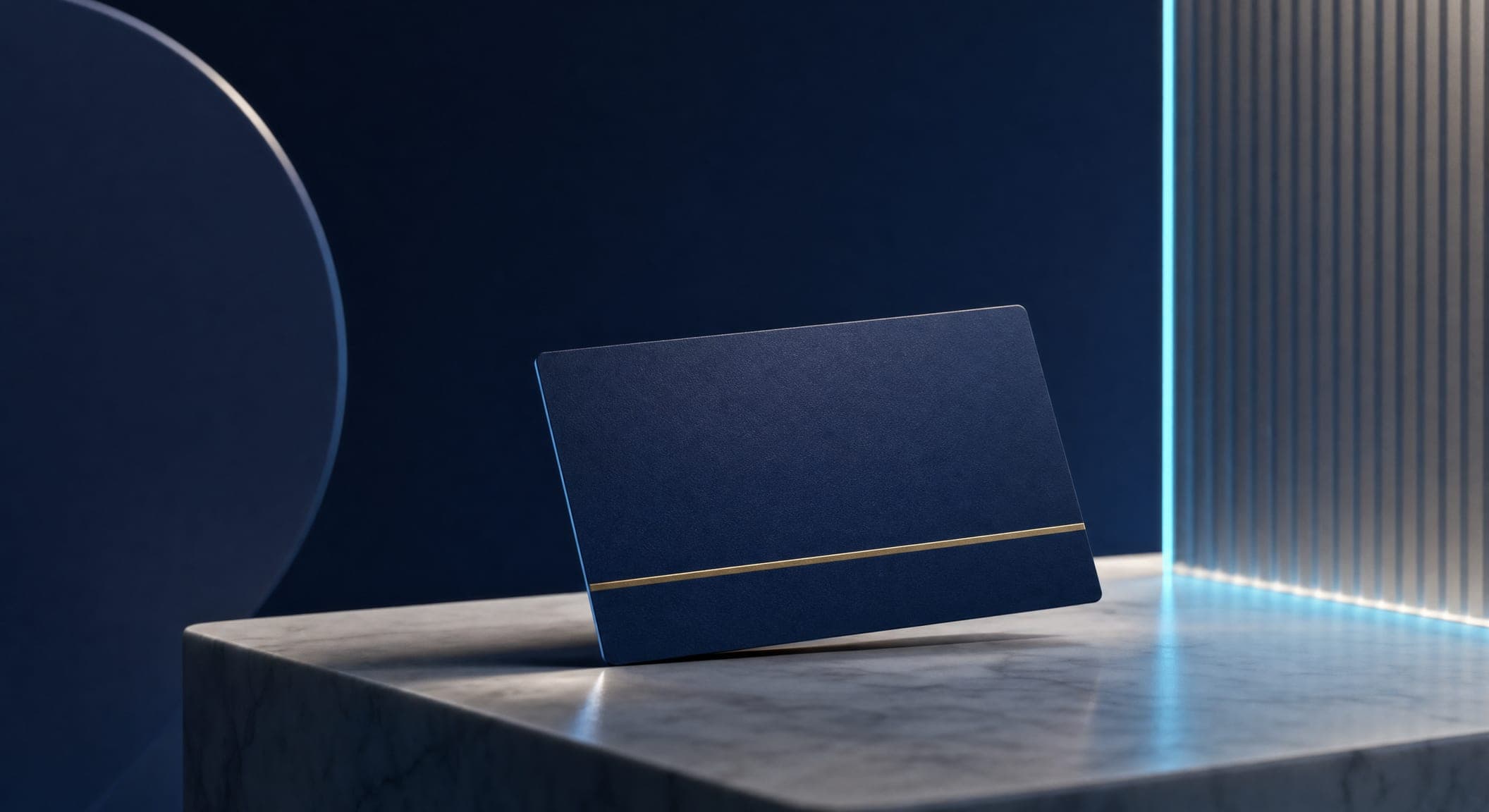
A lawyer's business card needs to say one thing: seriousness. In practice, that means minimalist design, a limited palette (dark blue, black, burgundy or gray with a touch of gold or silver), and classic typography, either serif or a clean modern sans. Avoid pastel colors, over-designed fonts and stock images. A card that looks like it was made in five minutes with a free template does more harm than good.
On a physical card, the material matters as much as the design: thick matte paper, and embossing or foil on one element only (the logo or the name). A card that feels substantial gives the impression of an established practice. In the market, quality printing of a few hundred cards usually costs a few hundred shekels, depending on the paper and finish; that's an estimate, and it's worth asking for a physical sample before placing a large order.
Logo: if the firm has a logo, use it. If it doesn't, a name and title in quality typography is better than a generic scales or gavel icon. On the digital card, the same rules apply to the photo, the button colors and the amount of text: one screen, one message. A design with more than one contact link at the top of the page is confusing.
Six common mistakes lawyers make
- A personal email. avi@gmail.com comes across as amateurish. An email on the firm's domain is a must, even for a solo lawyer.
- Over-the-top colors and typography. A card that looks like a bar flyer signals the opposite of the message.
- Clutter. Every practice area, every award and every association membership. Focus on two or three things.
- Outdated details. An old phone number or the address of an office you've left. Check quarterly, and on the digital card, update the same day.
- Stock icons. Generic scales are a cliché. Better to have no icon at all.
- Cutting corners on production. A card printed on an office printer looks like one. If you're going to print, print properly.
A seventh mistake, on the digital side: a digital card whose form isn't connected to anyone. An inquiry that gets sent and isn't answered within hours is a client who went to another firm.
Examples: what to learn from the good firms
The large firms in Israel use minimalist cards: the logo on one side, the details on the other, thick paper, a two-color palette. Premium clients expect this kind of aesthetic. Boutique firms take it in a more luxurious direction: textured paper, gold foil, a Tel Aviv address printed elegantly. That suits lawyers who specialize in luxury real estate or in international clients.
For a solo lawyer or a young firm: don't copy anyone blindly, but do take the principle of restrained color and quality material. On the digital side, in our article digital business card examples we broke down a lawyer's card alongside nine other professions, with the buttons each one must have. The card complements the firm's two other assets: the website, which we covered in our guide to building a website for a lawyer, and the firm's presence on Google, explained in SEO for lawyers. The card, the website and the SEO should all look like one firm.
What Simple Web does about it
We build digital business cards under the Studio 51 brand, with a dedicated template for law practices: phone, WhatsApp, Waze navigation, practice areas, a gallery and a contact form that goes straight to the firm's CRM. The design is matched to the firm's identity, so the card, the website and the email signature all look the same. For example, we built the digital presence of Or Attel Law & Mediation.
We build the cards with the help of AI, and a human team checks that every button leads to the right place and that the form reaches a person who answers. The price is set by the design and scope, in a quote after a short call. Simple Web is an AI-first marketing agency from Bnei Brak, certified Meta partners and Google advertising experts, with 200+ clients and 28 five-star Google reviews.
The bottom line: a lawyer's business card is a marketing asset, not an office expense. In 2026, the right combination is a quality physical card for the meeting and a digital card that's available in one click afterward, with both conveying the same promise of professionalism and precision. Want to see what your firm's digital card will look like? Get in touch with us.
Sources
- WhatsApp Business Platform — a business WhatsApp button on the digital card
Tags:
Recent posts