Paid Social Ad Creative: What Works on Facebook, Instagram and TikTok, and How to Test It
Paid social ad creative for Facebook, Instagram and TikTok: sizes for every placement, Hebrew pitfalls, a simple testing method and a brief template.

Paid social ad creative is what people actually see: the image or the video, the text and the button. In our experience, the same audience and the same budget can produce very different results purely because of the creative. That is why it is the first thing worth examining when a campaign is not working. This article will not explain again how Meta's auction prices ads. We will stay on the practical side: which sizes to prepare for each placement on Facebook, Instagram and TikTok, what goes wrong in Hebrew, and how to test versions without burning budget. We will also look at how to spot creative that has worn out, and at the end there is a brief template you can copy.
A format for every placement: the sizes worth preparing in advance
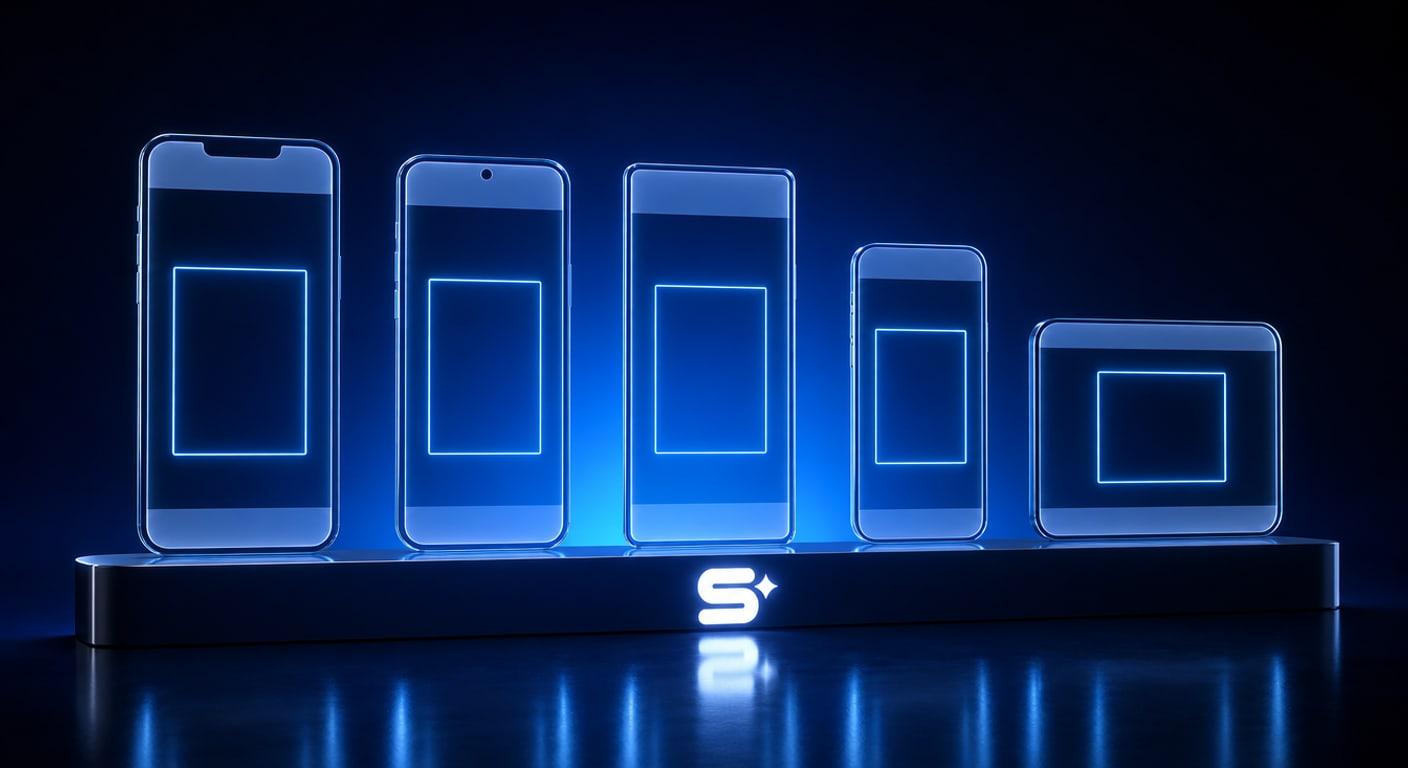
A single ad today runs in several placements at once: feed, Stories, Reels, and on TikTok the vertical feed. Every placement crops the image differently. So before you shoot anything, it is worth knowing what the platforms are asking for. The figures in the table are taken from Meta's Ads Guide and from TikTok's in-feed ad specifications, as they appeared in September 2026.
| Placement | Ratio | Recommended resolution | Text and limits |
|---|---|---|---|
| Facebook feed | 4:5 | 1440×1800 | Primary text 50–150 characters, headline 27 |
| Instagram feed | 4:5 | 1440×1800 | Primary text 125 characters, headline 40 |
| Instagram Stories | 9:16 | 1440×2560 | Primary text 125 characters |
| Instagram Reels | 9:16 | 1440×2560 | Primary text 44 characters |
| Carousel in the Instagram feed | 4:5 for images, 1:1 when there is video | At least 1080×1080 | 2–10 cards |
| TikTok feed (standard ad) | 9:16 recommended | At least 540×960 | Caption with no links, @ or hashtags |
Three things come out of the specifications that a lot of people miss:
- The safe zone. In Stories and Reels, Meta recommends leaving roughly 14% of the top, 35% of the bottom and 6% on each side free of text, logos or anything important. That is where the profile picture and the button sit. TikTok also publishes downloadable safe zone files on the same specifications page.
- Music in Reels. According to Meta, a Reels ad should not contain commercially licensed music. The recommendation there is original audio or music from the Meta Sound Collection.
- One file does not suit everything. A rule of thumb: shoot vertical, and keep the message in the centre of the frame. That way you can also crop a 4:5 version for the feed without losing the point.
Hebrew creative: RTL, numbers and on-screen text
Most guides are written in English and skip the problems that exist only in Hebrew. These are the five we run into most often:
- Numbers and English inside a sentence. A price in shekels, a percentage, a time or a product name in English tends to jump to the wrong side in editing tools that do not handle directionality well. So check the preview on a phone, not only on a computer.
- Punctuation that wanders. A full stop or a question mark that shows up at the start of the line instead of at the end. It looks careless.
- Burned-in subtitles. In Meta's guide, video captions are marked as optional but recommended. The Facebook Reels ad specifications state that automatic captioning is not supported. So it is better to burn Hebrew subtitles into the video itself.
- Text pacing. TikTok recommends displaying 5–10 words per second when you use on-screen text. In practice: one short line at a time, in a bold, legible typeface.
- Primary text that gets cut off. On Instagram Reels the recommendation is only 44 characters. Which means the offer has to appear in the first few words, not at the end of the paragraph.
The production side itself, from filming on a phone to building an organic video, we covered in our guide to Reels and short videos for business. Here we are only talking about what changes when the video becomes an ad.
What works in an ad: a strong opening, one message and a direct continuation on the page
An ad does not reach your followers. It reaches people who do not know you, in the middle of a scroll. That is why TikTok's creative recommendations open with three things: introduce the core message in the first three seconds, put the hook within the first six seconds, and end with a clear call to action. TikTok also recommends featuring people, such as employees, customers or creators, and favouring a style that is not overly polished so that it fits into the feed.
Two more rules we do not compromise on:
- One message per ad. A price, a service and a promotion in the same video sound like an advert, and none of them gets remembered.
- The promise continues on the page. Whatever the ad promises has to appear in the headline of the page or the form. An ad about a "free check" that leads to the home page leaves whoever clicked to hunt for the offer on their own.
A few illustrations, not client results:
- A facial treatment clinic: the therapist shows the stages of the treatment in half a minute, and closes with "message us to book".
- Real estate: a short tour of an apartment from the point of view of someone walking in the door, with the neighbourhood and the number of rooms on screen.
- An online store: a carousel where each card shows one problem the product solves, and the last card presents the offer.
How to test paid social ad creative without burning budget

A good test is not "upload another ad and see". It is a fixed order of four steps:
- Test ideas, not shades. TikTok recommends 3–5 creatives per ad group, and stresses that big differences between them are better, especially while testing. For example: a video that opens on the problem, a video that opens on the result, and a customer or an employee talking to camera.
- Give it time before you judge. Our rule of thumb: do not decide before a week of running and before every version has built up a few thousand impressions.
- Measure what matters. Cost per lead or per purchase, link click-through rate, and how many viewers stayed past the opening. Likes do not enter the decision. Without a working conversion event there is nothing to test at all, so it is worth going through our conversion tracking guide first.
- Add, do not start from scratch. TikTok recommends adding new creatives to an existing ad group rather than opening a new one. Meta likewise notes that keeping the original ad active, when you add a new ad, may maximise results.
How to know the creative has worn out
Meta has an explicit definition, on its creative fatigue recommendations page. These statuses usually appear for an ad set with a single creative. When your cost per result is higher than that of ads you ran in the past but less than twice as much, a Creative limited status appears in the Delivery column. When it has reached twice as much or more, you will see Creative fatigue. Meta counts all recent exposures of that image or video, including those from other campaigns from your Page. On TikTok the recommendation is to refresh when results decline consistently. An early sign we watch for: frequency climbing while the click-through rate falls.
A creative brief template: copy it and fill it in
Before you fill it in, it is worth seeing what the competition is running right now. How to do that we explained in our guide to the Facebook ad library.
- Objective: one action only. A lead, a WhatsApp message or a purchase.
- Audience: who they are, what hurts, and what they have already tried.
- The one message: the sentence the viewer needs to remember.
- Proof: what you show so that they believe it. A demonstration, a process, or a genuine review with the customer's permission.
- Three angles to test: problem, result, a person talking.
- Formats: 9:16 for Stories, Reels and TikTok, 4:5 for the feed, and a carousel when there are several products.
- On-screen text: one line at a time, in Hebrew that has been checked on a phone.
- Call to action and destination: what the button says, and which page or form it leads to.
- What is off limits: claims you cannot prove, unlicensed music, and important details at the edges of the frame.
5 common mistakes in ad creative
Mistake #1: boosting a post written for followers. Someone who does not know you cannot tell in the first second what you are offering.
Mistake #2: opening on the logo. The first three seconds go on the business name instead of on the problem or the offer.
Mistake #3: one version for every placement. A square image looks small in Reels, and long text gets cut off in Stories.
Mistake #4: changing everything at once. You swap the video, the audience and the budget on the same day, and then there is no way to know what made the difference.
Mistake #5: judging by a single day or by likes. An ad with plenty of comments can produce expensive leads, and the other way round.
How all of this feeds through to the price, and why weak creative makes every lead more expensive, we set out in our guide to what Facebook and Instagram advertising costs.
What Simple Web does about it
Simple Web is an AI-first marketing agency from Bnei Brak, certified Meta partners and Google advertising experts, working with 200+ businesses and holding 35 five-star Google reviews. In our paid social service we manage campaigns on Facebook, Instagram, TikTok and LinkedIn. The work covers audience definition, creative that stops the scroll, ads in several variations, conversion-focused landing pages and conversion measurement. After launch there is daily monitoring, AI-assisted tuning of audiences and creative, and a monthly report showing what each lead costs. The ad account is opened in your name and stays yours.
We produce the videos through our video production service, in our own studio in Bnei Brak. Marketing videos for social start from ₪1,500, and a short social video is ready within 3–5 working days. From a single shoot we cut a version for every platform. As for the management fee, the FAQ page on our site says: "Paid social management starts from ₪3,500 a month, not including ad budget."
Summary
Paid social ad creative is not pretty design. It is the decision that has the biggest effect on what you get for your budget. Prepare a version for each placement in advance, check the Hebrew on a phone, and present the offer in the first few seconds. After that, test a few genuinely different ideas, give them a week, and replace them when the cost per result starts to climb. Want us to go over your ads and tell you what we would test first? Book a free diagnostic call.
Sources
- Meta Ads Guide: ad specifications by format and placement: aspect ratios, resolutions, text lengths, safe zones and the music restriction in Reels
- Meta: Creative fatigue recommendations in Ads Manager: the definitions of Creative limited and Creative fatigue, and the recommendation to keep the original ad active
- TikTok: Auction In-Feed Ads specifications: feed ad dimensions, caption restrictions and safe zone files
- TikTok: Creative best practices for performance ads: 3–5 creatives per ad group, core message in 3 seconds, hook in 6 seconds and 5–10 words per second
Tags:
Growth
Recent posts