Architect landing page: process, portfolio and a project questionnaire (for interior designers too)
Architect landing page: how architects and interior designers show process, not just pictures, render vs. build, a project questionnaire and the title law.
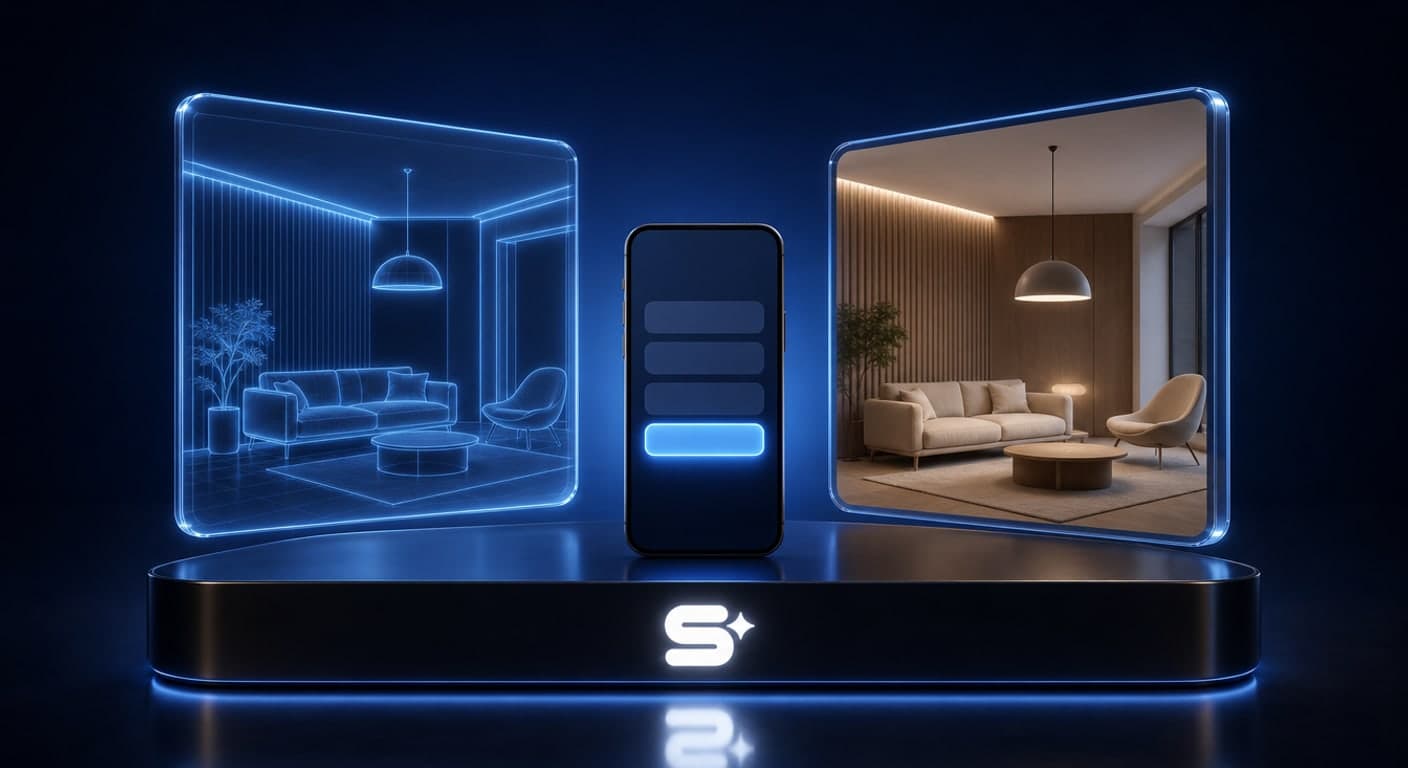
A client looking for an architect or an interior designer is not buying a pretty picture. They are buying a process that runs for months, so an architect landing page that works has to show that process: what happens at each stage, how the render compared with the finished build, and who you are a good fit for. A page that shows only a gallery looks impressive, but it doesn't answer the question the client is really asking: how will this work for me? In this article we take the page apart block by block, build a project questionnaire that filters enquiries, explain what differs between a page for an architect and a page for an interior designer, and go through two things worth checking before the campaign: the title "architect" and the rights to your photos.
Architect landing page: what it does that a portfolio website doesn't
A portfolio website serves people who have already heard of you, usually through a referral, and want to go through all your projects. A landing page serves someone who clicked on an ad with a specific need, such as "designing a private house in the Sharon" or "designing a new apartment bought from a developer, in central Israel". They are not looking for everything you have done, but for proof that you have done exactly this.
That is why the page presents one type of project, three projects of that type, your work process and one action. Our rule: if the headline or the questions in the form would change, build a separate page. For example, a studio that advertises both kitchen renovations and full-apartment design needs two pages, because the client, the scope and the questions are different.
We set out the general design principles, from the first screen on a phone to contrast, in designing a landing page in Hebrew. For examples of how pages in other fields are structured, see 10 landing page examples. Here we'll focus on what is specific to architecture and interior design.
Interior designer and architect landing pages: the structure, block by block

The skeleton is the same for both professions, and the content changes. We'll come to that later.
- A headline with the project type and the area. "Designing private houses in Emek Hefer" beats "Architecture and design of the highest standard". Next to it, a single button that opens the questionnaire.
- A line on who you are a good fit for. Property type, scope and area. A sentence like "We design private houses for families in the Sharon" saves both sides an unnecessary meeting.
- Three projects, not thirty. Each one with the property type, the floor area in square metres, what the client needed, and the render next to a photo of the finished build.
- The work process. The stages from the first meeting to handover, and next to each stage how long it actually takes you, not an average you found online.
- How you charge. You don't have to state a price. It is worth stating the method, whether per square metre, a lump sum or consultation hours, and what each one includes.
- Who is behind the project. A real photo of you, your education, and the people you work with regularly, such as a structural engineer, a lighting designer or a carpenter.
- Testimonials. Two or three, with the project type, and only from clients who agreed to be published.
- A questionnaire and one action. Next to them, a WhatsApp button for people who prefer to ask a question first.
There is no menu to the rest of the site on the page: a link to the full gallery is a way to leave the page without answering the questionnaire.
A portfolio that sells a process: render, build and photo rights
Your client knows that a render is a promise. What they want to see is that the promise is kept. That is why the strongest proof in a portfolio is a render and a photo of the same space after it was built, side by side.
Label every image: "render", "in progress" or "completed". A render presented as a finished project is found out at the first meeting, and then everything else looks less credible too. Next to each project, write one line of context: a four-room apartment, a couple who work from home, and what needed solving.
Watch the file size as well. According to Google's web.dev, to provide a good user experience, LCP, that is, the loading of the largest element visible on the screen, should occur within 2.5 seconds of when the page first starts loading. Full-resolution renders are the first suspects. Compress every image, and put a single image on the first screen.
Who owns the photo? Under section 35(a) of the Copyright Act, "in a work created on commission, the first owner of the copyright in it, in whole or in part, is the creator, unless otherwise agreed between the commissioner and the creator, expressly or by implication" (here and throughout, quotes from Israeli legislation are our own translation of the Hebrew). In other words, a photographer you hired, or an outside rendering studio, holds the rights by default. So ask for written permission that also covers paid campaigns. In addition, under section 46(1) the photographer has the right "that their name be stated on their work to the extent and degree appropriate in the circumstances", so add a credit. Also ask the homeowners for permission, and don't give the exact address. We are not lawyers, and the wording of the permission is worth checking with a lawyer.
A project questionnaire instead of "leave your details"

A form with only name and phone brings in enquiries, but every call starts from zero: which property, at what stage and at what scope. A long form with open fields, on the other hand, scares people off. The solution is a few questions answered with a tap, and only after them, name and phone:
- Property type: apartment, private house, office or shop.
- Stage: only just starting to think about it, already have a property or a plot, or already have plans and are looking for someone to see it through.
- Approximate size: three or four floor-area ranges in square metres.
- When you want to start: in the coming months, within the next six months, or don't know yet.
- Budget range: ranges you define, and always a "don't know yet" option too. This is the sensitive question, so it comes last and is optional.
That way you call the client back prepared, and enquiries that don't suit you filter themselves out. Don't ask for plans, photos or a free-text description of the project at this stage, because that is what the first call is for. The questionnaire collects personal information, so it is worth getting to know Amendment 13 to the Privacy Protection Law. And if you are torn between a questionnaire on the page and a form inside Facebook, we compared the two in Facebook lead form or landing page.
Architects and interior designers: what's different on the page
A landing page for an architect
The project is longer, the decision is a family one, and many projects have a building-permit stage in the middle. Show it as a stage in the process, and say honestly that how long the permit takes also depends on factors outside your control. In the questionnaire, the stage matters especially: there is a plot, there is an existing house to extend, or they are still looking. The right action is a first consultation meeting, not "get a quote".
As for the title: under section 2(b) of the Engineers and Architects Law, "no person shall bear the title engineer or architect, or any title similar to them to the point of being misleading, and no person shall pose as an engineer or as an architect, unless they are registered in the Register of Engineers and Architects, or are entitled to be registered in that Register by virtue of section 9(a)". Under section 2(a), the title "registered architect" is reserved for those who are registered in the Register. So before you write "architect" in a headline or an ad, make sure you meet these conditions. And if you are registered, say so on the page. It is the same layer of trust we recommended contractors display, through their registration in the Register of Contractors, in our article on building a website for a contractor.
A landing page for an interior designer
Here the decision is shorter, and the common projects are new apartments bought from a developer, renovations and redesigns. Here before and after is strong proof too, so a photo of the space before the work deserves a place on the page, taken from the same angle as the photo of the finished result. If you offer several tracks, such as a one-off consultation, full design and supervision of the works, say what each one includes. On top of that, a client who bought an apartment from a developer and was given a deadline for changes needs to see on the page that you know that stage.
Some interior designers call themselves an "interior architect" (in Hebrew, אדריכלית פנים or אדריכל פנים). Whether that term counts as a "title similar" to architect "to the point of being misleading", section 2(b) does not say explicitly. So before it goes into a headline or an ad, check with a lawyer.
Who this suits, and who it doesn't
A good fit:
- An office or studio that wants more projects of a specific type, in a specific area, and has the time to take them on.
- Anyone who has at least three photographed projects of the type they advertise.
- Anyone prepared to get back to enquiries within one working day.
Less of a fit:
- An office where most of the work comes from developers and construction companies. A campaign aimed at private clients won't reach them.
- Anyone who only has renders and no finished project yet. In our view it is better to start with a well-organised Instagram business profile, and build a page once there is a finished build to show.
- Anyone whose calendar is full six months ahead. A good page will only lengthen the waiting list.
What Simple Web does about it
Simple Web is an AI-first marketing agency from Bnei Brak, certified Meta partners and Google advertising experts, working with 200+ businesses and holding 35 five-star Google reviews. We build landing pages with AI, around one message and one action: a short form (usually name and phone), mobile-first design, pixels and conversion tracking. After launch, heatmaps and A/B tests show where visitors stop, and on a page like this one, whether the questionnaire helps or scares people off. We also built a portfolio website for Chaya ArchDesign. A landing page goes live within 7 business days, and the price is a custom quote by scope, after a free diagnostic call.
Summary
A landing page for architects and interior designers sells a process, not a picture. It is built for one type of project, shows three projects with the render next to the finished build, sets out the work stages, and ends with a short questionnaire that prepares the first call. Before launch, check two things: that the title in your headline is allowed by your registration or your entitlement to register, and that you have written permission to use the photos. Want to build a page for the project type that matters most to you? Book a free diagnostic call with us.
Sources
- Engineers and Architects Law, 1958 (Wikisource, Hebrew): section 2: who may bear the title "architect" and the title "registered architect"
- Copyright Act, 2007 (Wikisource, Hebrew): section 35(a) on ownership of a commissioned work, and section 46(1) on the creator's right to a credit
- web.dev: Web Vitals: the 2.5-second threshold for a good LCP
Tags:
Growth
Recent posts