Landing Page + Digital Business Card: The Winning Combination for Small Businesses
Why a focused landing page and a digital business card work better together: the step-by-step flow, when to charge on the page, and what to do tomorrow.
A landing page converts when it's focused. A digital business card works when it reaches the right person at the right moment. What happens when you connect the two? A small, closed-loop system: the landing page captures leads from campaigns, the digital card reaches them automatically and warms up the conversation, and after the deal closes it stays on the customer's phone and brings in referrals. In this article we explain the logic, how to build the flow, when it's worth taking payment right on the page (payment processing), and why it matters most for a small business in particular.
Why each tool on its own is limited
A landing page on its own is excellent for capturing leads from paid campaigns. It's focused, measurable and built to convert. Its weakness begins the moment the lead clicks "Send": they get a "Thanks, we'll get back to you," and the journey stops. If the business owner only gets back to them the next day, the lead has already talked to two competitors.
A digital business card on its own is excellent for a personal experience: a meeting, an event, a networking conversation. But it doesn't generate new leads from scratch. You have to already be in touch with someone to send them a card. It helps people remember you, not discover you.
The combination solves both problems: the page captures new leads from Google and Meta, and the card turns every lead into someone who already "knows you" before the first call. If you're just getting started, read the complete guide to building a landing page and the guide to digital business cards first.
The ideal flow, step by step
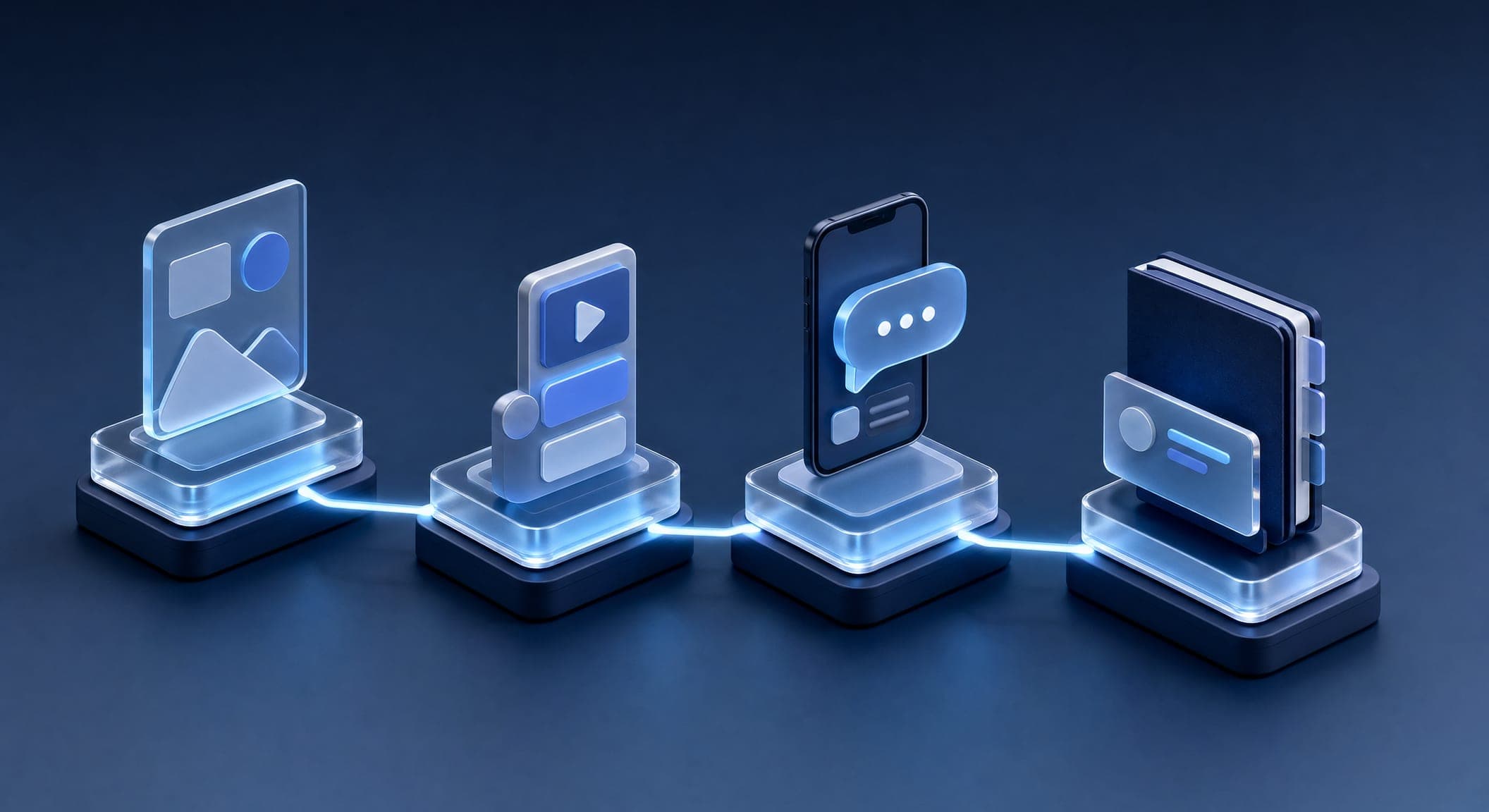
- Campaign: Google Ads or paid advertising on Meta, with one message and a defined audience.
- Landing page: A page dedicated to the campaign, one action, a form with two or three fields and a prominent WhatsApp button.
- Automatic response: The moment the form is submitted, the lead gets a WhatsApp message with your digital card. Within seconds, not minutes.
- Presence on their phone: The lead opens the card and sees a face, a gallery, testimonials and ways to get in touch. You go from "a business name" to a person.
- The sales call: You call as soon as you can, and the other side already knows who you are. A warm call instead of a cold one.
- Closing and referral: The customer saves the card on their phone. When a friend asks "Know anyone?", the card gets forwarded with a tap.
Step 3 runs on a simple automation: the form on the page triggers a scenario in Make or Zapier, which sends the card via WhatsApp Business and adds the lead to the CRM. How it works and what the law allows, we covered in our article on WhatsApp marketing for business.
A landing page with payment processing: when to charge right on the page
Not every landing page has to stop at collecting details. When the product is clear and the price is known, you can close the deal on the page itself: a workshop, a digital course, a deposit on an appointment, a training package. A landing page with payment processing shortens the journey from "leave your details and we'll get back to you" to "pay and get a confirmation."
How it's built: the payment button leads to a secure checkout form from an Israeli payment processor, or the form is embedded in the page itself. The payment methods Israeli customers expect: credit card, Bit, Apple Pay and PayPal. After payment, a thank-you page appears, a receipt and an automatic confirmation are sent, and ideally the digital card too, with contact details for what comes next.
When not to charge on the page: when the service requires customization or a discovery call before there's a price, and when the deal amount is high. In those cases, a short form and a call convert better than a "Pay now" button.
Why it matters for a small business in particular
A company with fifty employees has a CRM, a sales department and complex automations. It already does all of this. A business of one to ten people faces the same competition without the team. Every lead that falls through the cracks shows up in the monthly revenue.
This combination gives a small business what the big players built at great expense: an immediate response, a professional impression before the call, and a customer base that holds on to your contact details and passes them along. The investment is mostly one-time (the page, the card and the connection between them), plus a small monthly cost for the tools. The exact price depends on scope: what determines it, and what's worth paying for, is covered in our article on digital business card pricing.
What to do tomorrow morning
- No landing page yet? Start there. It's the backbone. Without a focused page, there's nothing to capture.
- Have a page, but closing is slow? Add the digital card and the automatic message. They cut a lead's "warm-up" time from hours to seconds.
- Have both? Check whether they're connected. Most businesses run each tool separately and miss out on the connection. The automation is what changes the picture.
What Simple Web does about it
We build all three parts under one roof: a landing page with one message and one action, a digital business card with phone, WhatsApp, Waze, a gallery and a form that connects to the CRM, and the automation that links them. The build is done with the help of AI, and the decisions stay with people. A landing page is usually ready within 5–7 business days; the price of each part is set in a quote based on scope after a free discovery call.
We're an AI-first marketing agency from Bnei Brak, certified Meta partners and Google advertising experts, with 200+ clients and 28 five-star Google reviews.
The bottom line: the landing page captures, the digital card warms up, and the connection between them is what turns clicks into deals. It's relatively inexpensive, measurable, and it works even when you're not near your phone. Want to see what it would look like for your business? Book a free discovery call.
Sources
- WhatsApp Business Platform — what the API allows for sending messages automatically
- Meta Business Help — setting up a pixel and tracking leads from Meta campaigns