
The Difference Between a Brand Website and a Business Page: What's Right for Your Business
A Facebook, Instagram or Google business page doesn't replace a brand website. When a page is enough, and how to build the right mix without wasting money.
"I have a Facebook business page, why do I need a website?" We get this question hundreds of times a year. The short answer: because a business page doesn't belong to you. It belongs to the platform. If tomorrow it changes the algorithm, limits your reach or blocks the page, the asset is gone. The full answer is more nuanced. In this article we'll explain what each type of business page gives you, why it doesn't replace a brand website, when it's still enough, and what the right combination looks like for an Israeli business in 2026.
What a "Business Page" Actually Is
A business page is your business's presence on someone else's platform. Each one serves a different purpose:
- Facebook page. Publishing content, building a community, and a base for paid campaigns.
- Instagram business account. Visual, suited to fields that sell through the eye: fashion, food, beauty, design.
- Google Business Profile. The listing that appears in local search and on Maps: hours, address, reviews, phone.
- LinkedIn company page. B2B, recruitment, professional authority.
Each one has real value. None of them is a substitute for a website.
Why a Business Page Can't Replace a Brand Website
- No control over the design. The template belongs to the platform. You choose photos and text, not the structure, typography or user experience. Every business looks the same.
- No serious organic SEO. In Google's search results for services, it's websites that rank, not Facebook pages. A business page usually shows up only when someone searches for the business name.
- Rented space. The platform can limit your reach, take down a page or change the rules without prior notice. Businesses have lost pages with large audiences overnight.
- No room for in-depth information. A post is short. A customer who wants to compare services, read a guide or see a portfolio needs a website.
- No integrations. A form that feeds a CRM, a booking system, payment processing, digital signatures, accurate conversion tracking: all of these require a website.
- No data of your own. On the platform, you see what it chooses to show you. On a website, you have full Google Analytics: where visitors came from, what they read, where they dropped off.
So what does a website need to include to do the job? We laid out the checklist in our complete guide to building a brand website.
Google Business Profile: The Business Page Every Local Business Needs
There's one business page that's the exception: your Google Business Profile. It's free, it appears in local search and on Maps, and it's the first thing a customer sees when they search for "restaurant in Bnei Brak" or "accountant in Netanya." Reviews, opening hours, address, photos and a call button, it's all there.
What's worth updating in your profile today:
- An accurate primary category and detailed services, because that's what Google uses to decide which searches to show you in.
- Correct opening hours, including holidays. A profile with the wrong hours loses trust on the first visit.
- Real photos of the business, the team and your work, not just a logo.
- A reply to every review, good or bad. Customers read the replies as closely as the reviews themselves.
- A link to your website and to the relevant service page, not just the home page.
But it doesn't replace a website either; it complements it. The profile gets the first local click, and the website is where it sends people: that's where the customer reads about your services, sees your work and leaves their details. A profile linked to an active, up-to-date website gives Google and the customer more information to work with. We manage Google Business Profiles for clients: replying to reviews, posting, updating details and tracking the searches that bring them customers. How to make the most of it is explained in our article on local SEO.
When a Business Page Alone Can Be Enough
There are situations where business pages can do the job, at least in the early stage:
- A very new business testing an idea. A Facebook or Instagram page plus a Google Business Profile can serve as a first version for a few months.
- A freelancer with regular clients. If most of your work comes from referrals rather than search, a LinkedIn profile and a Facebook page can be enough.
- A hyper-local business. A pizzeria, a neighborhood barbershop, a convenience store: a Google Business Profile and Instagram cover most of what's needed.
But as soon as the business grows, wants leads from search, or runs campaigns, a website becomes essential. And if you're a small business that wants to know what the right minimum is, we have an article on website building for small businesses.
What the Right Combination Looks Like
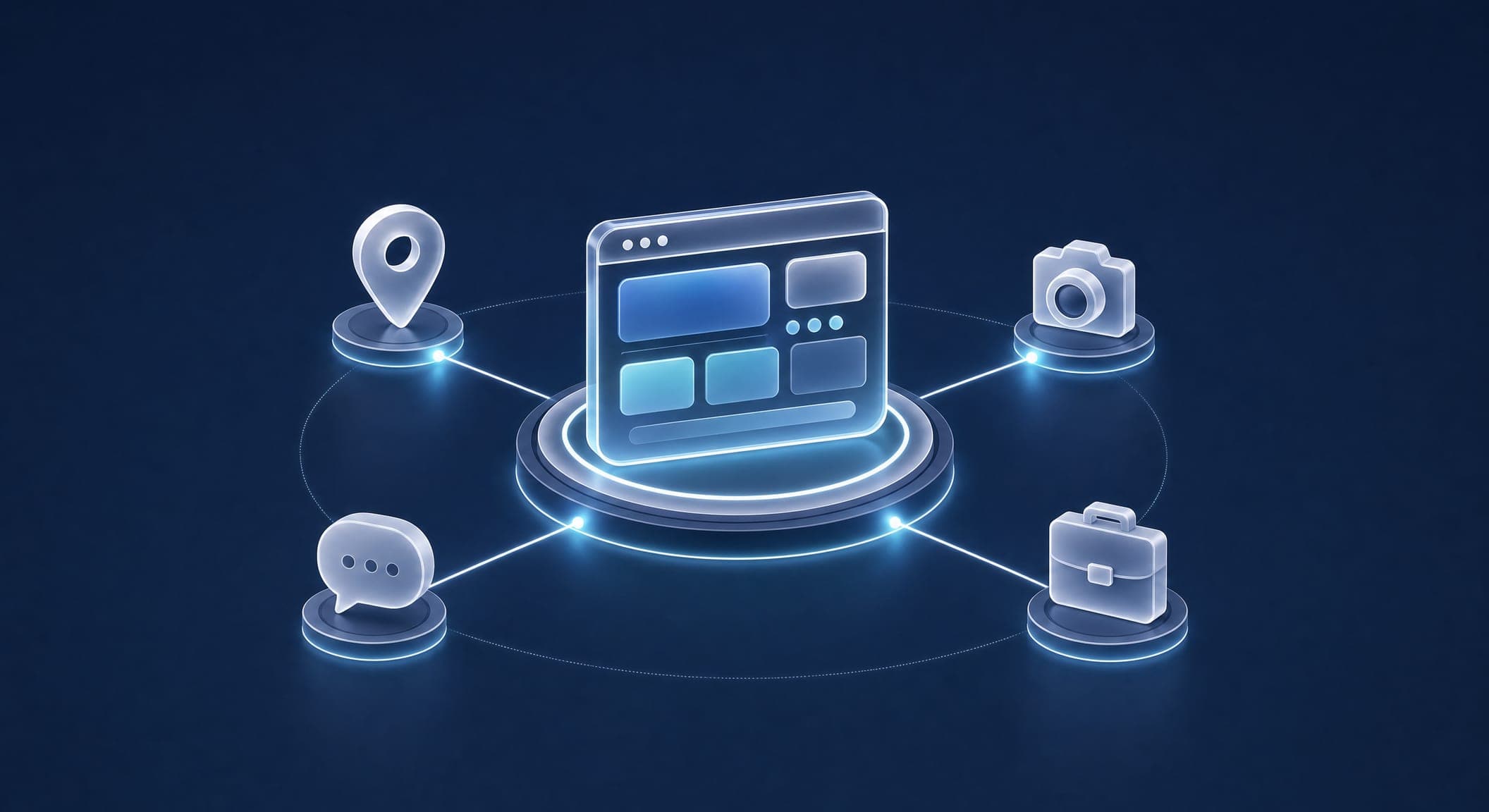
A modern business works with four channels in parallel, each serving a different role:
- Brand website. The digital home and the core. Every other channel leads to it.
- Google Business Profile. Local search: reviews, hours, location. Essential for a business with a physical address.
- Instagram and Facebook. Visual, day-to-day, community-building. Most of the content links to the website.
- LinkedIn. If relevant: B2B, recruitment, authority.
Without a website, the four channels don't come together as a system. They remain separate pieces, and customers get lost in the cracks between them.
So what do you do with the business page once you have a website? It isn't abandoned; it gets a defined role:
- Facebook and Instagram publish short content and lead to the relevant page on the website: an article, a service or a landing page. Not "visit our website," but a direct link to whatever you were talking about.
- The Google profile gets a short post about every new development, and a reply to every review within days.
- The bio and details on every page match what's on the website: the same name, the same address, the same phone number. Inconsistent details hurt your local ranking.
- Leads from every channel go into one place, the CRM connected to the form on your website, so no inquiry gets lost in private messages.
What Each One Costs
- Business pages. Setup is free. Ongoing management takes time: content, answering inquiries, updates. You can do it yourself or hand it over to an agency. What it includes and what it costs on the market is explained in our article on social media management for businesses.
- Brand website. With us, it starts from ₪5,000, within a typical range of ₪5,000–15,000 and up depending on scope, and includes 6 months of SEO articles as a gift. Maintenance and hosting depend on the plan.
- Google Business Profile. Free. Ongoing management, if you want someone to handle it for you, is priced by quote.
What Simple Web does about it
We're an AI-first marketing agency from Bnei Brak, certified Meta partners and Google advertising experts, with 200+ clients and 28 five-star Google reviews. We build your brand website with AI and connect the other channels to it: social media management, your Google Business Profile, and campaigns that lead to the website rather than to a page. That way every channel does its own job, and the leads arrive in one place.
To sum up: a business page is a channel. A website is an asset. The page helps you reach an audience, and the website turns that audience into customers. Most businesses need both, built to work together. Want to check what you're missing? Book a free discovery call, with no commitment.
Sources
- Google Business Profile — Help Center — what a Google Business Profile includes and how to manage it
- Meta Business Help Center — the official guidelines for business pages and campaigns